
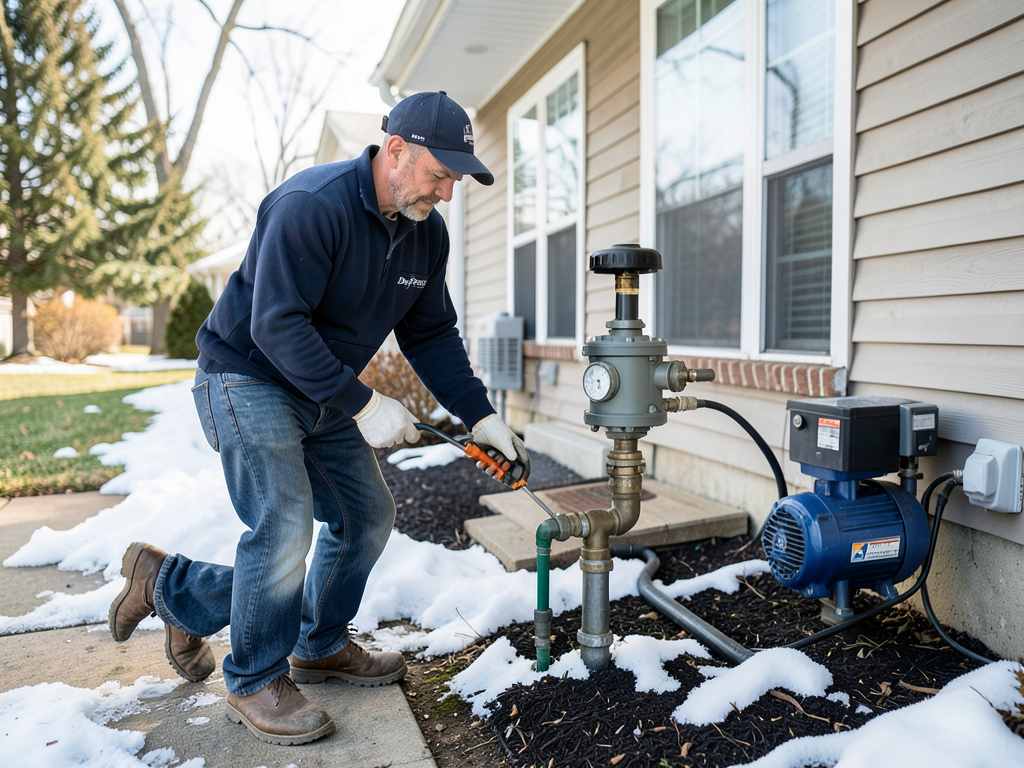
Winterizing Your Des Peres Sprinkler System and Outdoor Faucets
Missouri’s freeze-thaw cycles can turn a $50 outdoor faucet into a $5,000 repair nightmare. Des Peres homeowners face unique winter risks because our region’s clay soil retains moisture and shifts with temperature changes, putting extra stress on underground plumbing lines. The average January low in St. Louis County hovers around 24°F, cold enough to freeze water in pipes within hours of a sudden temperature drop. Why Kirkwood Homeowners Keep Calling Us for Stubborn Drain Clogs.
Water expands by 9% when it freezes. That expansion inside a ½-inch copper line creates over 2,000 pounds per square inch of pressure. Most residential plumbing systems are designed to handle 40-80 psi under normal conditions. When ice forms, that pressure has nowhere to go except through pipe walls, fittings, or the backflow preventer on your sprinkler system. How to Get a Same-Day Water Heater Repair in Sunset Hills.
The most vulnerable components in Des Peres homes include hose bibs on north-facing walls, exposed irrigation manifolds, and any outdoor kitchen plumbing. Homes built before 2010 often lack frost-proof hose bibs, making them prime candidates for winter damage. Even newer homes with frost-proof fixtures can fail if a garden hose remains attached, trapping water in the supply line. Plumbing Florissant.
Winterization isn’t just about preventing burst pipes. It’s about protecting your investment in landscaping, avoiding water damage to your foundation, and ensuring your sprinkler system starts up without costly repairs in spring. The process involves draining water from all outdoor lines, protecting exposed components, and sometimes adding insulation where code allows. Replacing Old Iron Pipes in Historic Webster Groves Homes.
Missouri’s building code requires outdoor water lines to be buried at least 30 inches deep to prevent freezing. St. Louis County plumbing code section 24-3-1410 specifies this depth requirement for frost protection. However, many Des Peres properties have shallower lines due to landscaping changes or utility conflicts. Those shallow lines need extra protection through proper winterization techniques.
Why Des Peres Homes Face Unique Winter Plumbing Risks
Des Peres sits in a transition zone between the Mississippi River Valley and the Ozark Plateau. This geography creates temperature swings that can drop 30 degrees overnight. When warm daytime temperatures thaw frozen pipes, water rushes back into damaged sections, causing immediate flooding inside walls or under foundations.
The clay soil common in West County expands when wet and contracts when dry. During winter, this soil movement can crack shallow water lines or shift fittings enough to create leaks. Combine that with freeze-thaw cycles, and you have a perfect storm for plumbing failures.
Older Des Peres neighborhoods like those near Manchester Road often have galvanized steel supply lines that corrode from the inside out. These pipes become brittle in cold weather and are more likely to burst than modern copper or PEX lines. The corrosion also narrows the pipe diameter, increasing water pressure and the risk of failure.
Newer developments around Des Peres Road typically use PEX piping, which resists freezing better than copper but can still fail at fittings. PEX expands slightly when frozen, potentially saving the pipe but damaging fittings or manifolds instead.
Local weather patterns show that Des Peres averages 18 days per year where temperatures stay below freezing for more than 24 hours. Those extended cold periods are when most freeze damage occurs, especially if homeowners are away and cannot monitor for problems.
Step-by-Step Sprinkler System Winterization Process
- Shut Off Main Water Supply
Locate the main shut-off valve for your irrigation system, typically in a green valve box near the water meter or where the line exits your home. Turn the valve clockwise until it stops. This valve controls water to the entire sprinkler system.
- Drain Manual Valves
Open all manual drain valves on your system, usually located at the lowest points of each zone. Allow water to drain completely, which may take 10-15 minutes per valve. Some systems have automatic drains that open when pressure drops below 10 psi.
- Backflow Preventer Protection
Shut off the valves on your backflow preventer, then open the test cocks with a flathead screwdriver to release trapped water. Backflow devices are particularly vulnerable because they contain multiple chambers where water can pool and freeze.
- Blow Out Remaining Water
Connect an air compressor to the system using the blowout port or hose bib. Apply air pressure of 40-80 psi for rigid PVC pipes or 25-50 psi for flexible polyethylene lines. Blow out each zone for 2-3 minutes until only air escapes from the heads.
- Insulate Exposed Components
Wrap the backflow preventer and any exposed pipes with foam insulation or heat tape. Secure with weatherproof tape. For severe cold snaps, consider adding a small heat source like a light bulb near the unit.
- Mark System Components
Place flags or markers where sprinkler heads and valve boxes are located. This prevents accidental damage during winter yard work and makes spring startup easier.
The blowout process requires compressed air at specific pressures. Too much pressure can damage pipes or fittings, while too little leaves water behind. Professional equipment typically delivers 185 cubic feet per minute at 80 psi, enough to clear even the longest zones in 60-90 seconds. Professional Gas Line Installation for Your New Outdoor Kitchen in Wildwood.
Backflow preventers must be tested annually per Missouri Department of Natural Resources regulations. Winterization provides an excellent opportunity to verify proper function before freezing weather arrives. A failed backflow device can contaminate your drinking water supply.
Protecting Outdoor Faucets and Hose Bibs
Frost-proof hose bibs work by extending the valve mechanism inside your home’s heated space, leaving only the faucet body exposed to cold. However, they still require proper winterization. The vacuum breaker on top of the faucet contains a small rubber seal that can freeze and crack.
Remove all hoses, splitters, and attachments from outdoor faucets by early November. Even frost-proof models can freeze if a hose traps water against the faucet body. Water expands into the hose connection, cracking the brass or splitting the internal mechanism.
For standard hose bibs without frost protection, install insulated faucet covers. These foam covers create an air pocket that slows heat loss. They cost $5-10 each and can prevent hundreds in damage. Secure them tightly with the drawstring or strap provided.
Older homes in Des Peres often have sill cocks mounted directly on exterior walls. These fixtures lack the extended valve stem of frost-proof models and are highly vulnerable to freezing. Consider replacing them with frost-proof versions before the first hard freeze.
Check for leaks around outdoor faucets before winterizing. A small drip can create an ice dam that prevents proper drainage. Replace worn washers or packing nuts to ensure a watertight seal.
If you have an outdoor kitchen, shut off the water supply to those lines and open all fixtures to drain remaining water. Outdoor kitchen plumbing is often overlooked but can cause extensive damage if it freezes and bursts inside your home’s walls.
Common Winterization Mistakes That Cost Des Peres Homeowners Thousands
The biggest mistake is assuming frost-proof means freeze-proof. Many Des Peres homeowners discover too late that a frost-proof faucet can still freeze if installed incorrectly or if the home’s siding creates a cold pocket around the fixture.
Another costly error is neglecting to drain the line between the shut-off valve and the outdoor faucet. This short section of pipe, often in an unheated crawl space or wall cavity, freezes quickly and can burst without warning.
Some homeowners skip the blowout step on their sprinkler system, thinking gravity drainage is sufficient. Modern systems with check valves in sprinkler heads can trap water that gravity cannot remove. That trapped water expands and cracks the plastic heads or valve bodies.
Using automotive antifreeze in plumbing systems is dangerous and illegal. Propylene glycol-based RV antifreeze is safe for plumbing but must be flushed completely in spring. Never use ethylene glycol (car antifreeze) as it’s toxic and can contaminate groundwater.
Delaying winterization until after the first hard freeze is a gamble. Once water freezes in pipes, expanding ice can crack fittings before you have a chance to drain the system. The damage often isn’t discovered until spring startup, when water floods the affected area.
Ignoring the backflow preventer is particularly risky. These devices contain springs and rubber components that can be damaged by freezing. Replacement costs $150-300, not including the potential water contamination issues if the device fails.
Professional vs. DIY Winterization: What Des Peres Homeowners Need to Know
DIY winterization works for simple systems with accessible valves and no complex features. However, professional service includes diagnostic testing that can prevent spring problems. A professional will check for leaks, test valve operation, and verify that all zones are receiving proper air pressure during blowout.
Professional winterization typically costs $75-150 for a standard residential system. This includes complete blowout, backflow preventer protection, and a system inspection. The cost is minimal compared to emergency repairs that can exceed $1,000 if pipes burst during winter.
Professionals use commercial-grade compressors that deliver consistent air volume and pressure. Consumer-grade shop compressors often lack the capacity to clear long pipe runs or zones with multiple heads. Inadequate blowout leaves water behind that can still freeze and cause damage.
Time is critical for professional service. Most companies book solid in late October and early November. Waiting until the last minute means risking damage if an early cold snap hits before your appointment.
Professional service includes documentation of the work performed, which can be valuable for warranty claims or if you sell your home. Many newer sprinkler systems require professional winterization to maintain manufacturer warranties.
Spring Startup: Reversing the Winterization Process
Spring startup is just as important as fall winterization. Opening valves too quickly can create water hammer that damages pipes and fittings. The proper startup process involves gradually restoring water pressure while checking for leaks.
Start by closing all manual drain valves that were opened for winterization. Open the main shut-off valve slowly, allowing the system to fill gradually. This prevents pressure surges that can damage valves or sprinkler heads.
Check each zone for proper operation. Look for geysers, which indicate broken pipes, or heads that don’t pop up, which may signal freeze damage. Replace any damaged components before the growing season begins.
Test the backflow preventer by running water through the system and checking for proper pressure. If pressure drops significantly or water flows backward, the device may need repair or replacement.
Adjust sprinkler heads for proper coverage. Winter freezes can shift heads slightly, affecting spray patterns. Proper adjustment prevents overwatering some areas while leaving others dry.
Consider having your backflow preventer tested by a certified professional. Missouri law requires annual testing for systems connected to potable water supplies. Testing ensures your drinking water remains protected from contamination.
Emergency Response: What to Do If You Discover Frozen Pipes
If you discover frozen pipes, act quickly but carefully. Turn off the main water supply immediately to prevent flooding if the pipe bursts. Locate the frozen section by feeling for extremely cold areas along exposed pipes.
Never use an open flame to thaw frozen pipes. Heat guns, hair dryers, or electric heating pads work safely when applied gradually. Start thawing at the faucet end and work toward the coldest section to allow steam to escape.
Open the faucet served by the frozen pipe. This provides an escape route for water as it thaws and helps you determine when flow is restored. Keep the faucet open during the entire thawing process.
Check for leaks as pipes thaw. Ice can temporarily seal cracks, so damage may not be apparent until thawing is complete. Have towels and buckets ready to catch any water that escapes.
If you cannot locate the frozen section or if multiple pipes are affected, call a professional immediately. Multiple frozen pipes often indicate a more serious problem like inadequate insulation or a heating system failure.
Document any damage with photos for insurance purposes. Many homeowner policies cover freeze damage if you’ve maintained your plumbing properly and can demonstrate reasonable preventive measures.
Local Building Codes and Winterization Requirements
St. Louis County plumbing code requires outdoor water lines to be installed below the frost line, which averages 30 inches in our region. However, many Des Peres homes have shallower lines due to landscaping or utility conflicts. These shallower lines require additional winter protection.
Missouri Department of Natural Resources mandates annual backflow preventer testing for irrigation systems connected to potable water supplies. The test must be performed by a certified tester and results submitted to the local water authority. Winterization provides an ideal time to verify device function.
Local building permits are required for any new outdoor plumbing installation, including irrigation systems, outdoor kitchens, and pool house plumbing. Permits ensure proper installation depth and protection against freezing, which can prevent costly repairs later.
Des Peres city ordinances require visible address numbers on all structures, including outdoor buildings like pool houses. This requirement helps emergency responders locate properties quickly during winter emergencies when response times are critical.
Homeowner association rules in some Des Peres neighborhoods may restrict certain winterization methods, such as heat tape installation or above-ground insulation. Check your HOA guidelines before implementing protection measures.
Cost Factors and Investment Protection
The cost of proper winterization is minimal compared to potential damage. A complete professional service for a typical Des Peres home with a sprinkler system and multiple outdoor faucets runs $150-300. This includes system blowout, faucet protection, and basic inspection.
Emergency repairs for frozen pipes can cost $500-2,000 depending on damage extent and accessibility. If pipes burst inside walls or under concrete, repair costs can exceed $5,000 when factoring in demolition, repair, and water damage restoration.
Insurance deductibles typically range from $500-2,000, meaning you’ll pay that amount out-of-pocket even if your policy covers the damage. Preventive winterization costs less than most deductibles.
Consider winterization an investment in your home’s value. Well-maintained plumbing systems prevent the kind of water damage that can reduce property values by 10-15% and complicate future sales.
Some newer homes include smart irrigation controllers with freeze sensors that automatically shut off the system when temperatures approach freezing. While these add $200-400 to installation costs, they can prevent freeze damage and reduce water waste.
Frequently Asked Questions
When should I winterize my sprinkler system in Des Peres?
Schedule winterization by mid-October in Des Peres. Our region typically sees the first hard freeze by late October or early November. Waiting until after the first freeze risks damage if temperatures drop suddenly before your appointment.
Can I use my air compressor to blow out my sprinkler system?
Yes, but ensure your compressor delivers at least 20 cubic feet per minute at 40-80 psi. Most consumer-grade compressors lack sufficient volume, leaving water in pipes. Professional equipment delivers consistent pressure needed to clear all zones completely.
Do frost-proof faucets really work in Missouri winters?
Frost-proof faucets work well when properly installed and maintained. However, they can still freeze if a hose remains attached, if installed in a cold pocket, or if the home’s heating fails. Always remove hoses and consider additional insulation in extreme cold.
What’s the difference between PEX and copper pipes for freeze resistance?
PEX expands slightly when frozen, potentially preventing pipe bursts, while copper is more rigid and likely to split. However, PEX fittings can still fail under freeze pressure. Both materials work well when properly installed below the frost line and winterized correctly.
How deep should sprinkler lines be buried in Des Peres?
Missouri building code requires water lines to be buried at least 30 inches deep to prevent freezing. However, many Des Peres properties have shallower lines due to landscaping or utility conflicts. These shallow lines need extra winter protection through proper winterization.
What happens if I forget to winterize and we get an early freeze?
If an early freeze catches you unprepared, turn off the main water supply immediately and call a professional. Do not attempt to thaw frozen pipes with open flames. The damage may be minimal if caught quickly, but waiting until spring often results in more extensive repairs.
Are outdoor kitchen water lines different from regular outdoor plumbing?
Outdoor kitchen lines often run through exterior walls or under decks where they’re more exposed to cold. They may also have additional fixtures like pot fillers or ice makers that require individual winterization. These systems need the same protection as standard outdoor plumbing plus any specialty fixtures.
How can I tell if my backflow preventer is damaged?
Signs of backflow preventer damage include water leaking from the relief valve, reduced water pressure, or water flowing backward when the system is off. A damaged device may also fail its annual test. Winter freeze damage often appears as cracked brass or leaking seals.
Is winterization really necessary for new homes with PEX plumbing?
Yes, even PEX plumbing needs winterization. While PEX resists freezing better than copper, fittings and manifolds can still fail under freeze pressure. New homes may also have shallow lines or exposed components that require protection regardless of pipe material.
What should I do if I discover a leak after winterizing?
Turn off the main water supply immediately and contact a professional plumber. Do not attempt to repair freeze damage yourself, as ice may have cracked multiple sections of pipe. Document the damage with photos for insurance purposes before repairs begin.
Protect Your Des Peres Home This Winter
Don’t wait until the first hard freeze to protect your outdoor plumbing. Des Peres homeowners who schedule winterization before late October avoid the rush and ensure their systems are protected before temperatures drop. Our team understands the unique challenges of Missouri winters and can identify vulnerabilities that generic services might miss.
We serve Des Peres and surrounding West County communities with professional winterization services that include complete system blowout, backflow preventer protection, and thorough inspection. Our technicians are certified in backflow testing and familiar with local building codes and permit requirements.
Call (314) 417-7677 today to schedule your winterization service. Early scheduling ensures you get the appointment time that works best for you and provides peace of mind knowing your plumbing is protected before the first cold snap hits. Don’t let a $50 repair turn into a $5,000 emergency this winter.
Pick up the phone and call (314) 417-7677 before the next storm hits. Our team is ready to help you avoid costly freeze damage and ensure your sprinkler system and outdoor faucets survive Missouri’s harsh winter months. Your home deserves professional protection from licensed plumbers who understand local conditions.
{
“@context”: “https://schema.org”,
“@type”: “BlogPosting”,
“headline”: “Winterizing Your Des Peres Sprinkler System and Outdoor Faucets”,
“description”: “Protect your Des Peres home from costly freeze damage with professional sprinkler system winterization and outdoor faucet protection. Call (314) 417-7677 today.”,
“wordCount”: 3089,
“datePublished”: “2026-02-26T14:48:00.000Z”,
“dateModified”: “2026-02-26T14:48:00.000Z”,
“inLanguage”: “en-US”,
“mainEntityOfPage”: {
“@type”: “WebPage”,
“@id”: “https://peakplumbingstlouis.com”
},
“publisher”: {
“@type”: “LocalBusiness”,
“name”: “Peak Plumbing St. Louis”,
“url”: “https://peakplumbingstlouis.com”
},
“author”: {
“@type”: “Organization”,
“name”: “Peak Plumbing St. Louis”,
“url”: “https://peakplumbingstlouis.com”
},
“image”: {
“@type”: “ImageObject”,
“url”: “https://peakplumbingstlouis.com/wp-content/uploads/2026/03/winterizing-your-des-peres-sprinkler-system-and-ou-1.png”
}
}
{
“@context”: “https://schema.org”,
“@type”: “Plumber”,
“name”: “Peak Plumbing St. Louis”,
“url”: “https://peakplumbingstlouis.com”,
“address”: {
“@type”: “PostalAddress”,
“addressLocality”: “St. Louis”
},
“areaServed”: {
“@type”: “City”,
“name”: “St. Louis”
}
}
{
“@context”: “https://schema.org”,
“@type”: “FAQPage”,
“mainEntity”: [
{
“@type”: “Question”,
“name”: “When should I winterize my sprinkler system in Des Peres?”,
“acceptedAnswer”: {
“@type”: “Answer”,
“text”: “Schedule winterization by mid-October in Des Peres. Our region typically sees the first hard freeze by late October or early November. Waiting until after the first freeze risks damage if temperatures drop suddenly before your appointment.”
}
},
{
“@type”: “Question”,
“name”: “Can I use my air compressor to blow out my sprinkler system?”,
“acceptedAnswer”: {
“@type”: “Answer”,
“text”: “Yes, but ensure your compressor delivers at least 20 cubic feet per minute at 40-80 psi. Most consumer-grade compressors lack sufficient volume, leaving water in pipes. Professional equipment delivers consistent pressure needed to clear all zones completely.”
}
},
{
“@type”: “Question”,
“name”: “Do frost-proof faucets really work in Missouri winters?”,
“acceptedAnswer”: {
“@type”: “Answer”,
“text”: “Frost-proof faucets work well when properly installed and maintained. However, they can still freeze if a hose remains attached, if installed in a cold pocket, or if the home’s heating fails. Always remove hoses and consider additional insulation in extreme cold.”
}
},
{
“@type”: “Question”,
“name”: “What’s the difference between PEX and copper pipes for freeze resistance?”,
“acceptedAnswer”: {
“@type”: “Answer”,
“text”: “PEX expands slightly when frozen, potentially preventing pipe bursts, while copper is more rigid and likely to split. However, PEX fittings can still fail under freeze pressure. Both materials work well when properly installed below the frost line and winterized correctly.”
}
},
{
“@type”: “Question”,
“name”: “How deep should sprinkler lines be buried in Des Peres?”,
“acceptedAnswer”: {
“@type”: “Answer”,
“text”: “Missouri building code requires water lines to be buried at least 30 inches deep to prevent freezing. However, many Des Peres properties have shallower lines due to landscaping or utility conflicts. These shallow lines need extra winter protection through proper winterization.”
}
},
{
“@type”: “Question”,
“name”: “What happens if I forget to winterize and we get an early freeze?”,
“acceptedAnswer”: {
“@type”: “Answer”,
“text”: “If an early freeze catches you unprepared, turn off the main water supply immediately and call a professional. Do not attempt to thaw frozen pipes with open flames. The damage may be minimal if caught quickly, but waiting until spring often results in more extensive repairs.”
}
},
{
“@type”: “Question”,
“name”: “Are outdoor kitchen water lines different from regular outdoor plumbing?”,
“acceptedAnswer”: {
“@type”: “Answer”,
“text”: “Outdoor kitchen lines often run through exterior walls or under decks where they’re more exposed to cold. They may also have additional fixtures like pot fillers or ice makers that require individual winterization. These systems need the same protection as standard outdoor plumbing plus any specialty fixtures.”
}
},
{
“@type”: “Question”,
“name”: “Is winterization really necessary for new homes with PEX plumbing?”,
“acceptedAnswer”: {
“@type”: “Answer”,
“text”: “Yes, even PEX plumbing needs winterization. While PEX resists freezing better than copper, fittings and manifolds can still fail under freeze pressure. New homes may also have shallow lines or exposed components that require protection regardless of pipe material.”
}
},
{
“@type”: “Question”,
“name”: “What should I do if I discover a leak after winterizing?”,
“acceptedAnswer”: {
“@type”: “Answer”,
“text”: “Turn off the main water supply immediately and contact a professional plumber. Do not attempt to repair freeze damage yourself, as ice may have cracked multiple sections of pipe. Document the damage with photos for insurance purposes before repairs begin.”
}
}
]
}
{
“@context”: “https://schema.org”,
“@type”: “HowTo”,
“name”: “How to Winterize Your Sprinkler System”,
“step”: [
{
“@type”: “HowToStep”,
“position”: 1,
“name”: “Shut Off Main Water Supply”,
“text”: “Locate the main shut-off valve for your irrigation system, typically in a green valve box near the water meter or where the line exits your home. Turn the valve clockwise until it stops. This valve controls water to the entire sprinkler system.”
},
{
“@type”: “HowToStep”,
“position”: 2,
“name”: “Drain Manual Valves”,
“text”: “Open all manual drain valves on your system, usually located at the lowest points of each zone. Allow water to drain completely, which may take 10-15 minutes per valve. Some systems have automatic drains that open when pressure drops below 10 psi.”
},
{
“@type”: “HowToStep”,
“position”: 3,
“name”: “Backflow Preventer Protection”,
“text”: “Shut off the valves on your backflow preventer, then open the test cocks with a flathead screwdriver to release trapped water. Backflow devices are particularly vulnerable because they contain multiple chambers where water can pool and freeze.”
},
{
“@type”: “HowToStep”,
“position”: 4,
“name”: “Blow Out Remaining Water”,
“text”: “Connect an air compressor to the system using the blowout port or hose bib. Apply air pressure of 40-80 psi for rigid PVC pipes or 25-50 psi for flexible polyethylene lines. Blow out each zone for 2-3 minutes until only air escapes from the heads.”
},
{
“@type”: “HowToStep”,
“position”: 5,
“name”: “Insulate Exposed Components”,
“text”: “Wrap the backflow preventer and any exposed pipes with foam insulation or heat tape. Secure with weatherproof tape. For severe cold snaps, consider adding a small heat source like a light bulb near the unit.”
},
{
“@type”: “HowToStep”,
“position”: 6,
“name”: “Mark System Components”,
“text”: “Place flags or markers where sprinkler heads and valve boxes are located. This prevents accidental damage during winter yard work and makes spring startup easier.”
}
],
“image”: “https://peakplumbingstlouis.com/wp-content/uploads/2026/03/winterizing-your-des-peres-sprinkler-system-and-ou-1.png”
}
{
“@context”: “https://schema.org”,
“@type”: “BreadcrumbList”,
“itemListElement”: [
{
“@type”: “ListItem”,
“position”: 1,
“name”: “Home”,
“item”: “https://peakplumbingstlouis.com”
},
{
“@type”: “ListItem”,
“position”: 2,
“name”: “Blog”,
“item”: “https://peakplumbingstlouis.com/blog”
},
{
“@type”: “ListItem”,
“position”: 3,
“name”: “Winterizing Your Des Peres Sprinkler System and Outdoor Faucets”
}
]
}
{
“@context”: “https://schema.org”,
“@type”: “Service”,
“serviceType”: “Plumbing”,
“provider”: {
“@type”: “LocalBusiness”,
“name”: “Peak Plumbing St. Louis”,
“url”: “https://peakplumbingstlouis.com”
},
“areaServed”: {
“@type”: “City”,
“name”: “St. Louis”
},
“description”: “Protect your Des Peres home from costly freeze damage with professional sprinkler system winterization and outdoor faucet protection. Call (314) 417-7677 today.”
}