




Menu

Medical & Dental Gas Plumbing in St. Louis | Code-Compliant Systems That Keep Your Facility Operational

Peak Plumbing St. Louis designs, installs, and maintains medical gas piping systems that meet NFPA 99 standards and Missouri state regulations, minimizing downtime and protecting patient safety in hospitals, clinics, and dental practices across the metro.

Slider Image 1
Slider Image 2
Slider Image 3
Slider Image 4
Slider Image 5
Slider Image 7
Slider Image 8
Slider Image 9
Slider Image 10
Slider Image 11

Why Medical Gas System Failures Are Costly in St. Louis Healthcare Facilities

A failing medical gas pipeline system does not just disrupt workflow. It shuts down operating rooms, forces emergency department closures, and exposes your facility to regulatory penalties from the Missouri Department of Health and Senior Services. In St. Louis, where winter freeze-thaw cycles stress copper piping and summer humidity accelerates corrosion in medical gas systems, even small installation errors compound quickly.

Dental gas piping systems face similar risks. Nitrous oxide leaks compromise patient sedation safety. Oxygen delivery failures halt procedures. Compressed air contamination forces equipment shutdowns. These are not hypothetical scenarios. They are the daily reality for facilities relying on improperly installed or maintained med gas installation services.

St. Louis medical facilities operate under strict NFPA 99 compliance requirements. Every valve, regulator, and alarm system must function flawlessly. When certified med gas plumbers cut corners during installation or fail to verify gas purity levels, the facility owner bears the liability. Joint Commission audits do not accept excuses. They demand documentation, redundancy, and proper brazing techniques that withstand decades of use.

Medical gas pipeline services are not traditional plumbing. The stakes are different. A residential water leak causes property damage. A medical oxygen system failure during surgery causes patient harm. That difference demands specialized training, third-party testing, and a contractor who understands the liability you carry every time a patient enters your building.

Why Medical Gas System Failures Are Costly in St. Louis Healthcare Facilities
How We Install Medical Gas Systems That Pass Inspection the First Time

How We Install Medical Gas Systems That Pass Inspection the First Time

We begin every medical gas piping system installation with a pressure decay test before we even connect end-use equipment. This verifies zero leakage in the distribution network. Most contractors skip this step and discover leaks during final commissioning, which delays your certificate of occupancy and pushes back revenue-generating operations.

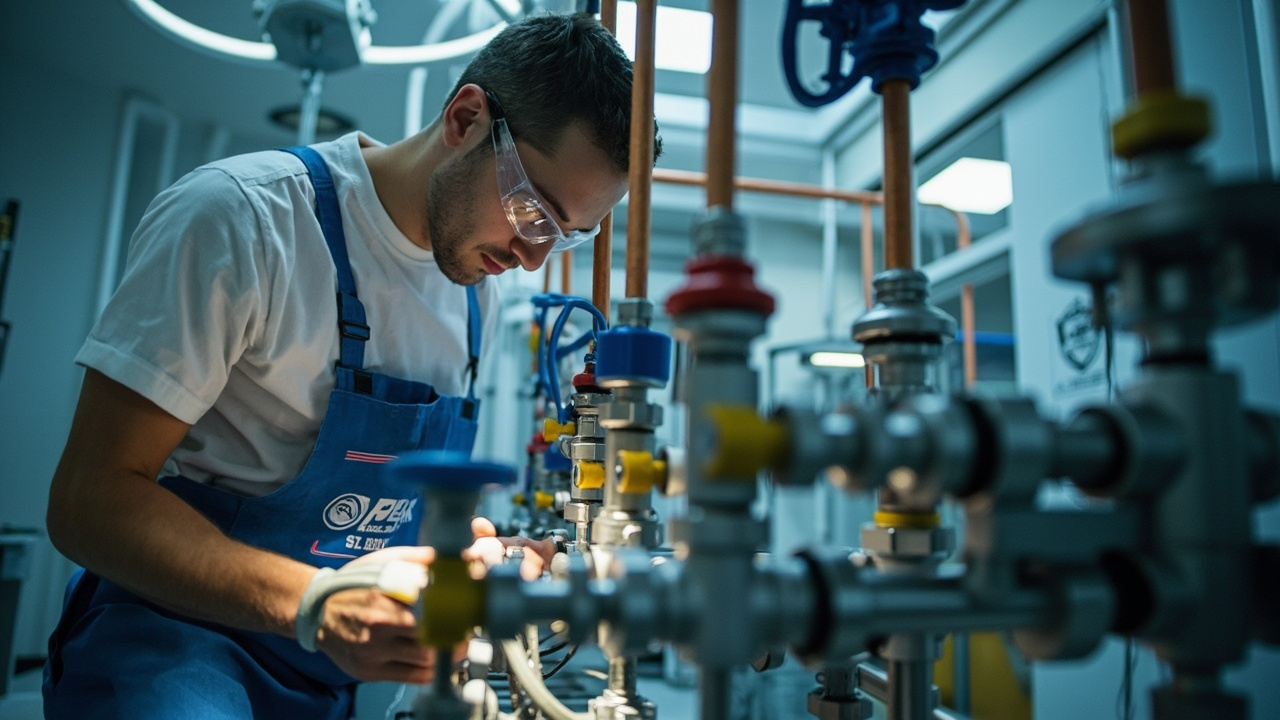
Our certified med gas plumbers use only medical-grade Type K or Type L copper tubing with silver brazing alloys that meet AWS A5.8 specifications. We do not use soft solder. We do not use compression fittings on concealed piping. We follow NFPA 99 requirements for zone valve boxes, master alarms, and area alarms without shortcuts. Every junction is documented with digital photography and pressure test logs that satisfy Joint Commission auditors.

For dental gas piping installations, we size compressors and vacuum pumps based on simultaneous use calculations, not just chair count. A four-chair practice running high-speed handpieces and surgical suction requires different CFM capacity than a pediatric practice focused on cleanings. We calculate actual demand, add a safety factor, and install systems that maintain pressure under peak load.

Missouri requires medical gas contractors to hold specific endorsements beyond standard plumbing licenses. We maintain active ASSE 6010 and 6030 certifications for medical gas installers and verifiers. That means we can both install your system and perform the independent verification required before you receive your final inspection approval. This eliminates the need for a second contractor and compresses your project timeline by weeks.

What Happens During Your Medical Gas System Installation

Medical & Dental Gas Plumbing in St. Louis | Code-Compliant Systems That Keep Your Facility Operational
01

Site Survey and Load Calculation

We document every oxygen outlet, nitrous station, and vacuum connection point in your facility. This includes measuring distances to the source equipment room, identifying vertical riser routes through existing structure, and calculating pressure drop across the entire distribution network. We provide a written report with recommended pipe sizes, valve locations, and alarm panel placement before any installation begins.
02

System Installation and Purging

We install medical gas pipeline services using continuous runs wherever possible to minimize joints. Each brazed connection is purged with nitrogen to prevent internal oxidation that contaminates gas purity. After rough-in, we pressure test the system at 150 percent of operating pressure for 24 hours. Only systems with zero measurable leak proceed to final connection. This eliminatesCallback scenarios where leaks appear weeks after you open.
03

Verification and Commissioning

We perform gas-specific purity testing on oxygen and nitrous systems using calibrated analyzers. This confirms no cross-contamination exists between gas types. We verify alarm functionality by simulating low-pressure scenarios and confirming audible and visual alerts activate correctly. You receive a complete test report package that includes pressure decay charts, purity certificates, and valve tag documentation required for your occupancy permit and accreditation surveys.

Why St. Louis Medical Facilities Choose Peak Plumbing for Critical Gas Systems

Medical gas installation is not a learning opportunity. It requires contractors who have brazed thousands of joints under inspection scrutiny and understand how Missouri regulators interpret NFPA 99 standards. We have worked with the City of St. Louis Building Division and St. Louis County Department of Public Health on medical gas system approvals across multiple facility types, from single-room dental suites to multi-floor hospital additions.

Our experience with St. Louis building stock matters. Many medical offices occupy converted commercial spaces with limestone foundations and brick cavity walls. Routing new medical gas piping through these structures without compromising fire ratings or structural elements requires spatial problem solving that generic plumbing contractors do not possess. We have navigated tight ceiling plenums in Central West End medical buildings and routed gas lines through basement mechanical chases in Clayton office conversions.

We maintain relationships with medical equipment suppliers across the metro. When your anesthesia machine vendor needs specific outlet configurations or your dental chair manufacturer requires non-standard vacuum flow rates, we coordinate directly with them to ensure compatibility. This eliminates the finger-pointing that happens when the equipment installer blames the piping contractor and the piping contractor blames the equipment specs.

Downtime costs you thousands per hour in lost procedures and staff overhead. We schedule installations during your closed hours and coordinate utility shutdowns to minimize operational disruption. For occupied facilities requiring phased installation, we design temporary gas delivery solutions that keep critical areas online while we upgrade distribution systems in sections. You stay operational. Patients stay safe. Inspectors stay satisfied.

What to Expect When You Hire Peak Plumbing for Medical Gas Services

Project Timeline and Coordination

Most dental gas piping installations for single-suite practices complete in three to five business days, including inspection scheduling. Multi-room medical facilities with separate oxygen, nitrous, vacuum, and compressed air systems require two to four weeks depending on pipe run lengths and source equipment placement. We provide a written schedule during the proposal phase that identifies inspection milestones and coordination points with your general contractor. If your project requires weekend or after-hours work to avoid disrupting patient care, we accommodate that without premium charges that inflate your budget.

Initial System Design Review

We review your architectural plans and equipment schedules before you break ground. This identifies conflicts between structural elements and required pipe routing, confirms adequate space exists for source equipment and alarm panels, and verifies outlet quantities match your operational requirements. Many contractors wait until rough-in to discover problems. We catch them during design review when changes cost hundreds instead of thousands. You receive marked-up plans with recommended modifications and a written scope that eliminates surprise change orders during construction.

System Performance and Compliance

Your completed medical gas pipeline system will deliver specified pressure and flow at every outlet under simultaneous peak demand. Oxygen systems maintain 50 to 55 psi at the outlet. Vacuum systems achieve 12 to 18 inches of mercury. Alarms activate at the correct pressure thresholds. Every component carries proper labeling with gas type and flow direction. You receive laminated system diagrams, valve location maps, and emergency shutdown procedures mounted in your equipment room. These are not optional extras. They are code requirements that prevent operational failures and protect your license.

Ongoing Maintenance and Testing

NFPA 99 requires annual testing of medical gas systems, including alarm functionality checks and pressure verification. We offer scheduled maintenance agreements that satisfy these requirements and document compliance for your accreditation surveys. Our technicians track test dates, maintain calibrated equipment for purity analysis, and provide written reports after each visit. This eliminates the scramble to find qualified contractors when Joint Commission auditors request your maintenance logs. If your facility adds new procedure rooms or relocates equipment, we modify existing systems to maintain code compliance without full replacement costs.

Frequently Asked Questions

You Have Questions,
We Have Answers

What type of pipe is used for medical gas? +

Medical gas systems require Type K or Type L copper pipe, specifically seamless and cleaned for oxygen service. St. Louis healthcare facilities must meet NFPA 99 standards, which mandate copper piping due to its corrosion resistance and reliability. Each pipe segment is degreased, brazed with silver alloy, and pressure tested to prevent contamination. Never use PVC, galvanized steel, or standard plumbing copper. The pipe assembly is labeled with color-coded markings for oxygen, nitrous oxide, nitrogen, and medical air. Installations in hospitals across the St. Louis metro require third-party verification to ensure patient safety and code compliance.

What is a gas plumber called? +

A gas plumber is often called a medical gas installer or certified medical gas specialist when working in healthcare settings. In commercial contexts, this professional holds ASSE 6010 certification to install, maintain, and test medical gas piping systems. The role differs from general plumbing because it requires specialized training in NFPA 99 standards, brazing techniques, and cross-connection prevention. St. Louis healthcare facilities rely on these specialists for oxygen, nitrous oxide, vacuum, and waste anesthetic gas systems. The term gas fitter also applies when referring to fuel gas installations, but medical gas work demands a higher level of regulatory compliance.

What is a med gas certification? +

A med gas certification is ASSE 6010 Professional Qualification Standard for Medical Gas Systems Installers. This credential verifies that a technician understands NFPA 99 regulations, brazing procedures, pressure testing, and verification protocols for medical gas pipelines. The certification requires passing a written exam and demonstrating hands-on competency. In St. Louis, hospitals, surgery centers, and dental practices mandate this certification for anyone installing or servicing oxygen, nitrous oxide, vacuum, or nitrogen systems. Certification renewal occurs every three years. This standard protects patients by ensuring installations meet life-safety requirements and prevent cross-contamination or gas delivery failures.

Does a plumber deal with gas pipes? +

Yes, but only if the plumber holds specialized certification. General plumbers handle water and drainage systems. Medical gas work requires ASSE 6010 certification and understanding of NFPA 99 life-safety codes. In St. Louis, commercial plumbers who pursue this credential can install and service medical gas piping in hospitals, clinics, and dental offices. The work involves brazing copper pipe with silver alloy, pressure testing to 150 psi, and verifying zone valves and alarms. Fuel gas installations for boilers or kitchen equipment fall under different licensing. Always verify that your contractor carries current medical gas certification before starting any healthcare facility project.

What is a medical gas plumber? +

A medical gas plumber specializes in installing and maintaining life-support gas systems in healthcare facilities. This professional designs, installs, and tests piping networks that deliver oxygen, nitrous oxide, nitrogen, medical air, and vacuum systems to patient care areas. St. Louis hospitals and surgery centers require medical gas plumbers to hold ASSE 6010 certification and follow NFPA 99 standards. The work involves brazing copper pipe, installing zone valves, leak testing at elevated pressures, and coordinating third-party verification. Unlike general plumbing, medical gas work is life-critical and requires zero tolerance for contamination or cross-connections.

Which type of pipe cannot be used for a gas? +

PVC, galvanized steel, and black iron pipe cannot be used for medical gas systems. NFPA 99 prohibits these materials because they introduce contamination risks, corrosion particles, or chemical reactions with oxygen. PVC degrades under pressure and releases volatile compounds. Galvanized coatings flake and clog regulators. Black iron oxidizes and creates fire hazards in oxygen-rich environments. St. Louis healthcare installations require seamless Type K or Type L copper pipe, cleaned and brazed to oxygen-service standards. Even standard plumbing copper is unacceptable unless it is specifically prepared for medical gas. Compliance protects patients and prevents catastrophic system failures.

How St. Louis Building Codes Affect Medical Gas System Design

St. Louis operates under the 2018 International Plumbing Code with local amendments that affect medical gas installations. The City requires separate shut-off valves for each patient care area, not just zone valves at the source. St. Louis County mandates specific alarm panel placement in continuously occupied areas, which affects equipment room design in multi-tenant medical buildings. These local interpretations of NFPA 99 catch out-of-state contractors who assume national standards apply uniformly. We know which inspectors enforce which amendments and design systems that pass without reinspection delays.

Medical facilities in historic districts face additional constraints. Buildings along Locust Street and in the Central West End require Historic Preservation Commission approval for exterior modifications, which affects vent terminations for medical air compressors and vacuum pumps. We work with preservation architects to design compliant systems that satisfy both health department requirements and historic guidelines. This local knowledge prevents project delays and keeps your certificate of occupancy on schedule. When your contractor understands St. Louis regulatory requirements before the first permit application, your project stays on budget and on time.
Plumbing Services in The St. Louis Area

Peak Plumbing St. Louis is proud to serve the entire St. Louis metropolitan area and surrounding communities. Our dedicated team is strategically located to respond quickly to your residential and commercial plumbing needs. You can view our primary service area on the map below, but if you're located nearby and have a plumbing issue, don't hesitate to give us a call to see how we can assist you.

Address:
Peak Plumbing St. Louis, 4565 McRee Ave, St. Louis, MO, 63110

Additional Services We Offer

Our news updates

Latest Articles & News from The Blogs

How to Stop Your Kirkwood Basement Bar Ejector Pump From Failing \n\n Your basement bar is the heart of your…

How to Stop Your Kirkwood Basement Bar Ejector Pump From Failing

How to Stop Your Kirkwood Basement Bar Ejector Pump From Failing \n\n Your basement bar is the heart of your…

Why a Pre-Listing Plumbing Inspection is Essential for Selling Your Huntleigh Home

Why a Pre-Listing Plumbing Inspection is Essential for Selling Your Huntleigh Home Selling a home in Huntleigh requires more than…

Why Your Spanish Lake Shower Has Terrible Water Pressure

Why Your Spanish Lake Shower Has Terrible Water Pressure Nothing ruins a morning like stepping into a shower that barely…

Contact Us

Your facility deserves medical gas piping systems installed correctly the first time. Call Peak Plumbing St. Louis at (314) 417-7677 to schedule a site evaluation. We provide written proposals with itemized costs and project timelines within 48 hours.