



Menu

Preventative Commercial Maintenance in St. Louis – Minimize Downtime and Avoid Catastrophic System Failures

Peak Plumbing St. Louis delivers scheduled commercial plumbing upkeep that keeps your facility operational, protects your bottom line, and prevents expensive emergency repairs before they shut down your business.

Slider Image 1
Slider Image 2
Slider Image 3
Slider Image 4
Slider Image 5
Slider Image 7
Slider Image 8
Slider Image 9
Slider Image 10
Slider Image 11

Why St. Louis Commercial Properties Cannot Afford Reactive Plumbing Management

Your facility operates on tight margins. A single plumbing failure in a St. Louis commercial building can halt operations, trigger health code violations, and cost thousands in lost revenue per hour. The city's aggressive freeze-thaw cycles place extraordinary stress on commercial water lines, while the region's hard water accelerates mineral buildup in boilers, water heaters, and supply lines serving multi-tenant buildings.

Most commercial property managers in St. Louis address plumbing problems only after they cause visible damage. This reactive approach guarantees higher repair costs, business interruption, and tenant complaints. A burst pipe in a historic Soulard building or a backed-up grease trap in a Central West End restaurant does not wait for a convenient time to fail.

Commercial plumbing maintenance plans eliminate these risks through systematic inspections and proactive repairs. Routine commercial plumbing inspections identify corrosion in cast iron waste stacks, failing backflow preventers, and undersized water heaters before they create liability issues. Preventive commercial plumbing services address minor problems during scheduled maintenance windows, not during peak business hours.

Commercial plumbing service agreements provide budget predictability and priority response. You know your annual maintenance costs, and you avoid the premium rates associated with emergency calls. Scheduled commercial plumbing upkeep ensures your property meets local code requirements, maintains adequate water pressure for upper floors, and operates efficiently year-round. This is not optional for commercial facilities in St. Louis. This is operational risk management.

Why St. Louis Commercial Properties Cannot Afford Reactive Plumbing Management
How Peak Plumbing St. Louis Protects Your Commercial Investment

How Peak Plumbing St. Louis Protects Your Commercial Investment

We approach commercial plumbing maintenance through systematic risk assessment and targeted intervention. Our process begins with a comprehensive facility audit that documents every fixture, valve, water heater, backflow device, and waste line in your building. We map your system, identify code compliance gaps, and establish a baseline for performance metrics.

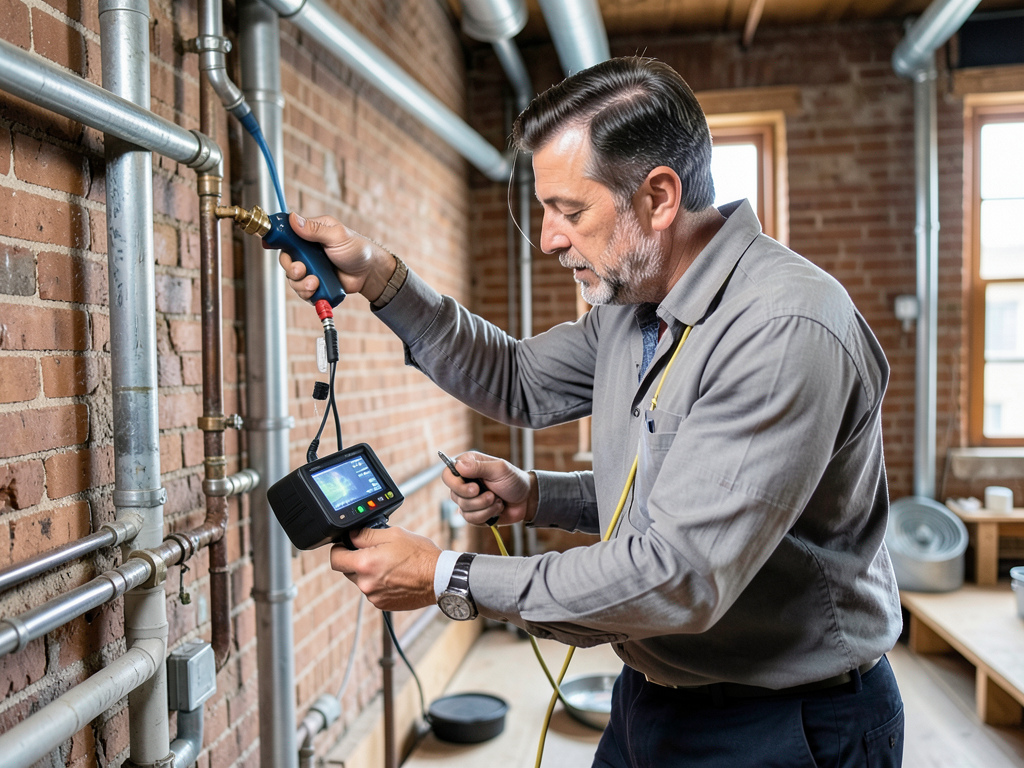
Our technicians inspect high-risk components first. We test backflow preventers required by Missouri American Water, inspect fire suppression system connections, and verify proper function of pressure-reducing valves serving multi-story buildings. We use video inspection on main sewer lines to identify root intrusion, joint separation, and clay pipe deterioration common in older St. Louis commercial properties.

We address mineral accumulation in commercial water heaters and boilers before it reduces capacity or causes premature failure. We inspect expansion tanks, check anode rods, and flush sediment that accumulates faster in St. Louis due to high mineral content. We test temperature and pressure relief valves to ensure they will function during an overpressure event.

Our commercial plumbing service agreements include quarterly inspections of critical systems and annual comprehensive facility reviews. We provide detailed reports documenting findings, recommended repairs, and compliance status. You receive photographic evidence of conditions and clear explanations of why specific repairs matter for your operation.

We schedule maintenance during low-traffic hours to minimize disruption. We coordinate with property management to ensure tenant notification and access. We maintain detailed service records that satisfy insurance requirements and support property valuations during transactions. This is methodical protection for your commercial asset.

What Happens During Commercial Maintenance Service

Preventative Commercial Maintenance in St. Louis – Minimize Downtime and Avoid Catastrophic System Failures
01

System Documentation and Audit

We catalog every plumbing component in your facility and establish performance baselines. Our technicians photograph existing conditions, test water pressure at multiple fixtures, and verify proper drainage throughout your building. We identify immediate code violations, safety hazards, and components approaching end of service life. You receive a comprehensive facility report that serves as your maintenance roadmap.
02

Preventive Service and Repairs

We address identified issues during scheduled maintenance windows. This includes flushing water heaters, replacing worn valve components, clearing drain lines, and adjusting water pressure regulators. We test backflow devices, inspect exposed piping for corrosion, and verify proper function of emergency shutoffs. We replace failing components before they cause operational problems. All work is documented with before and after photos.
03

Ongoing Monitoring and Support

We provide quarterly follow-up inspections to verify system performance and catch new issues early. You receive priority response for any problems that arise between scheduled visits. We maintain detailed service records that track component age, repair history, and replacement schedules. You gain predictable maintenance costs, extended equipment life, and reduced emergency repair frequency. Your facility stays operational without plumbing-related disruptions.

Why St. Louis Commercial Property Managers Choose Peak Plumbing

Commercial plumbing in St. Louis presents unique challenges that require local expertise. The city's building stock includes structures dating to the 1800s with cast iron waste systems, galvanized supply lines, and drainage systems that predate modern codes. We understand how these older systems interact with contemporary fixtures and how to maintain mixed-age plumbing infrastructure.

We know St. Louis plumbing codes and work directly with city inspectors on commercial projects. We understand backflow prevention requirements for buildings connected to public water systems, grease trap regulations for food service establishments, and accessibility standards for commercial restrooms. We maintain relationships with local suppliers that allow us to source commercial-grade components quickly without extended lead times.

Our experience with St. Louis commercial properties includes multi-tenant office buildings in Clayton, historic retail spaces downtown, industrial facilities near the riverfront, and hospitality properties throughout the metro. We have addressed corrosion issues in buildings with original plumbing, upgraded water heater capacity for expanding businesses, and resolved drainage problems in properties with inadequate pitch or undersized waste lines.

We respond to commercial service calls within two hours and maintain after-hours availability for true emergencies. Our commercial clients receive dedicated account management and direct technician contact numbers. We provide detailed quotes for recommended repairs with clear explanations of why specific work matters for your operation. We never upsell unnecessary services, and we never leave your facility without ensuring all systems are operational. We protect your business by keeping your plumbing infrastructure reliable.

What to Expect from Commercial Maintenance Service

Scheduled Service Without Disruption

We perform maintenance during off-hours or low-traffic periods to minimize impact on your business. Most quarterly inspections take two to four hours depending on facility size. We coordinate with your management team to ensure appropriate access and tenant notification. If we identify issues requiring immediate attention, we provide options for temporary measures until comprehensive repairs can be scheduled. You maintain normal operations while we protect your plumbing systems.

Comprehensive Facility Assessment

Our initial facility audit examines every component of your plumbing system. We test water pressure, inspect exposed piping, verify proper drainage, and document conditions with photographs. We review previous repair records if available and identify patterns that indicate systemic problems. You receive a detailed report categorizing findings by urgency and providing cost estimates for recommended repairs. This assessment forms the foundation of your maintenance plan and helps you budget for necessary improvements.

Operational Reliability and Code Compliance

Our maintenance service keeps your facility operational and compliant with local regulations. We ensure backflow devices pass required annual testing, grease traps function properly, and water heaters maintain adequate capacity for your occupancy. We address small leaks before they cause structural damage, clear slow drains before they back up, and replace aging components before they fail. Your tenants experience consistent water pressure, reliable hot water, and proper drainage throughout your building.

Documentation and Service Records

We maintain detailed records of all inspections, repairs, and component replacements. You receive written reports after each service visit documenting work performed, findings, and recommendations. These records satisfy insurance requirements, support property valuations, and demonstrate proper maintenance during tenant disputes. We track component age and replacement schedules to help you plan capital improvements. Your service history transfers seamlessly if you sell the property or change management companies.

Frequently Asked Questions

You Have Questions,
We Have Answers

What are the 5 types of preventive maintenance? +

The five types of preventive maintenance include time-based maintenance, which follows fixed schedules like quarterly inspections. Usage-based maintenance triggers service after specific equipment run hours. Predictive maintenance uses sensors and diagnostics to identify failures before they occur. Risk-based maintenance prioritizes critical systems that impact business continuity. Condition-based maintenance monitors equipment performance in real time, adjusting service intervals based on actual wear. For St. Louis commercial properties, blending time-based and predictive approaches works best given our seasonal temperature swings and high humidity, which accelerate wear on HVAC compressors, evaporator coils, and control systems.

How much does preventive maintenance cost for commercial HVAC? +

Preventive maintenance for commercial HVAC varies based on system size, complexity, and facility type. A standard rooftop unit maintenance plan ranges from several hundred to several thousand dollars annually, depending on tonnage and access difficulty. Multi-zone systems or chillers require more labor and specialized diagnostics, increasing costs. St. Louis climate demands more frequent filter changes and coil cleaning due to humidity and pollen, which affects pricing. Calculate cost as a percentage of replacement value. Investing 2-3% of system value annually in preventive care reduces emergency repair expenses by 30-40% and extends equipment lifespan significantly.

What are the 7 elements of preventive maintenance? +

The seven elements of preventive maintenance include inspections to identify wear and defects, lubrication of moving parts to reduce friction, cleaning of components like coils and filters, adjustments to belts and calibration settings, minor repairs before they escalate, component replacement on a scheduled basis, and detailed documentation tracking all service activities. For St. Louis commercial facilities, documentation proves critical for warranty compliance and code audits. These elements reduce downtime, maintain energy efficiency, and protect your capital investment. Structured preventive programs address each element systematically, preventing the cascading failures common in neglected systems during our extreme summer heat.

What are examples of preventative maintenance? +

Preventative maintenance examples include quarterly filter replacements, annual refrigerant level checks, belt tension adjustments, thermostat calibration, drain line flushing, electrical connection inspections, and compressor motor lubrication. For St. Louis commercial buildings, coil cleaning before cooling season prevents efficiency losses from pollen and cottonwood seed buildup. Condensate pan treatments stop algae growth in our humid climate. Roof-mounted equipment requires fastener checks after winter freeze-thaw cycles. Control system diagnostics catch sensor drift before occupant complaints arise. Scheduled damper inspections ensure proper airflow distribution. These routine tasks prevent equipment failures during peak demand periods when replacement parts cost more and availability drops.

What are the 4 P's of maintenance? +

The four P's of maintenance are Preservation, which maintains equipment in as-new condition through routine care. Prediction, which uses data to forecast failures before they happen. Prevention, which stops problems through scheduled interventions. Protection, which safeguards assets from environmental damage and operational stress. For St. Louis commercial properties, protection matters given our freeze-thaw cycles, high summer humidity, and storm exposure. Prediction grows more valuable as sensor technology improves and labor costs rise. Balancing all four P's creates a maintenance strategy that minimizes downtime, controls costs, and maximizes return on your equipment investment while meeting tenant comfort expectations.

What is the 10% rule of preventive maintenance? +

The 10% rule suggests allocating 10% of equipment replacement cost annually toward preventive maintenance and minor repairs. This benchmark helps commercial property managers budget appropriately. A rooftop unit costing $15,000 to replace warrants roughly $1,500 yearly in maintenance investment. The rule balances proactive care with financial reality. In St. Louis, where seasonal extremes stress equipment harder than moderate climates, some facility managers budget 12-15% for critical systems. The rule provides a starting point, but adjust based on equipment age, usage intensity, and business criticality. Underfunding maintenance accelerates depreciation and increases total cost of ownership significantly.

What is the $5000 AC rule? +

The $5,000 rule suggests replacing residential HVAC equipment when repair costs exceed $5,000 or when the repair cost multiplied by equipment age exceeds $5,000. For commercial systems, the threshold scales upward based on equipment value and business impact. A $25,000 rooftop unit might justify a $7,000 compressor replacement if the unit is only five years old. St. Louis commercial property owners should factor in lost productivity, tenant satisfaction, and emergency service premiums when applying this rule. Calculate replacement versus repair using lifecycle cost analysis, not just immediate expense. Consider energy efficiency gains from newer equipment against remaining useful life.

How often should a commercial HVAC system be serviced? +

Commercial HVAC systems require service quarterly as a baseline, with critical components inspected monthly. Rooftop units need pre-season tune-ups before summer cooling and winter heating demands peak. High-use facilities like restaurants or data centers warrant monthly inspections. St. Louis humidity requires more frequent drain line checks and coil cleaning than drier climates. Building automation systems need calibration twice yearly. Refrigerant levels should be verified annually. Filter change frequency depends on occupancy and outdoor air quality, typically monthly to quarterly. Document all service activities for warranty compliance and code inspections. Consistent service intervals prevent the costly failures common during July heat waves.

What does HVAC preventive maintenance include? +

HVAC preventive maintenance includes filter inspection and replacement, refrigerant level verification, electrical connection tightening, compressor amp draw testing, thermostat calibration, condensate drain flushing, coil cleaning, belt tension adjustment, damper operation checks, and control system diagnostics. Technicians measure temperature differentials, inspect ductwork for leaks, lubricate motors and bearings, and document baseline performance metrics. For St. Louis commercial properties, coil treatments prevent biological growth in humid conditions. Economizer inspections ensure free cooling functions properly during shoulder seasons. Combustion analysis on gas furnaces maintains safety and efficiency. Comprehensive maintenance preserves warranty coverage, maintains energy efficiency, and extends equipment lifespan while reducing emergency repair frequency.

What are the 5 basic maintenance skills? +

The five basic maintenance skills include mechanical aptitude for understanding how systems function and interact. Electrical troubleshooting to diagnose control issues and power problems. Diagnostic thinking to identify root causes rather than symptoms. Documentation discipline to track service history and performance trends. Communication ability to explain technical issues and recommendations to non-technical stakeholders. For commercial maintenance teams serving St. Louis properties, add refrigeration knowledge given our climate demands on cooling systems. Understanding building codes and safety protocols prevents liability. Effective technicians combine hands-on skills with analytical thinking. These competencies reduce downtime, control costs, and protect asset value while maintaining comfortable, productive commercial environments.

How St. Louis Water Quality Affects Commercial Plumbing Longevity

St. Louis water contains high mineral concentrations that accelerate scale buildup in commercial water heaters, boilers, and supply lines. The Missouri River water source carries dissolved calcium and magnesium that precipitate when heated, reducing water heater efficiency by up to 30 percent annually without proper maintenance. Commercial facilities with multiple water heaters face compounding costs as scale buildup forces equipment to work harder, increasing energy consumption and shortening service life. Preventive commercial plumbing services that include regular flushing and descaling extend equipment life and maintain operational efficiency.

Peak Plumbing St. Louis understands the specific challenges that commercial properties face in this region. We have maintained plumbing systems in St. Louis commercial buildings for years and know how local water conditions, seasonal temperature swings, and aging infrastructure affect system performance. Our technicians receive ongoing training on commercial plumbing codes and best practices. We maintain relationships with local inspectors and suppliers that allow us to resolve problems quickly without extended downtime. Choosing a local commercial plumbing provider means working with technicians who understand your specific operational challenges and regulatory environment.
Plumbing Services in The St. Louis Area

Peak Plumbing St. Louis is proud to serve the entire St. Louis metropolitan area and surrounding communities. Our dedicated team is strategically located to respond quickly to your residential and commercial plumbing needs. You can view our primary service area on the map below, but if you're located nearby and have a plumbing issue, don't hesitate to give us a call to see how we can assist you.

Address:
Peak Plumbing St. Louis, 4565 McRee Ave, St. Louis, MO, 63110

Additional Services We Offer

Our news updates

Latest Articles & News from The Blogs

How to Stop Your Kirkwood Basement Bar Ejector Pump From Failing \n\n Your basement bar is the heart of your…

How to Stop Your Kirkwood Basement Bar Ejector Pump From Failing

How to Stop Your Kirkwood Basement Bar Ejector Pump From Failing \n\n Your basement bar is the heart of your…

Why a Pre-Listing Plumbing Inspection is Essential for Selling Your Huntleigh Home

Why a Pre-Listing Plumbing Inspection is Essential for Selling Your Huntleigh Home Selling a home in Huntleigh requires more than…

Why Your Spanish Lake Shower Has Terrible Water Pressure

Why Your Spanish Lake Shower Has Terrible Water Pressure Nothing ruins a morning like stepping into a shower that barely…

Contact Us

Do not wait for a plumbing failure to shut down your business. Call Peak Plumbing St. Louis at (314) 417-7677 to schedule a comprehensive facility assessment. We will document your system, identify risks, and create a maintenance plan that protects your investment and keeps your property operational.