





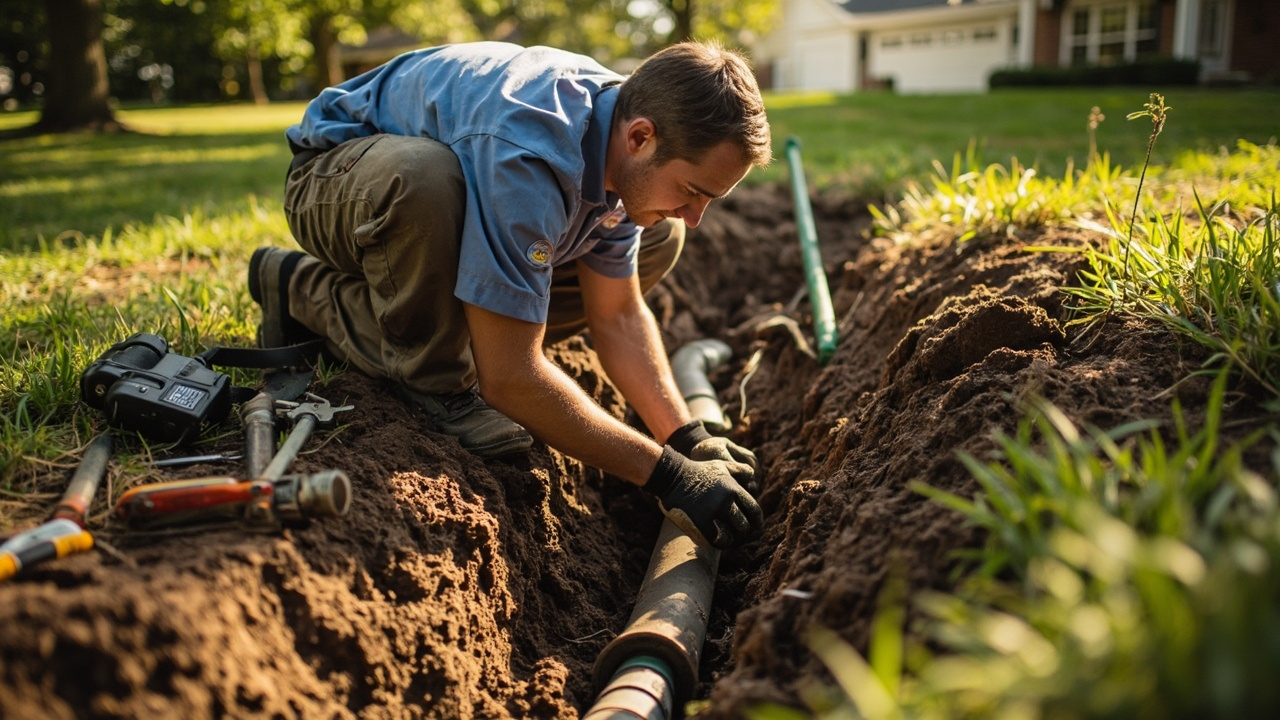

St. Louis clay soil is highly expansive, meaning it swells when saturated and contracts during dry periods. This constant movement exerts lateral pressure on buried sewer pipes, especially older clay tile or cast iron lines that rely on joint integrity to prevent leaks. When the soil shifts, joints separate, allowing roots and groundwater to infiltrate the line. Freeze-thaw cycles worsen the problem, as water trapped in cracks expands when frozen and widens the damage. Properties near the Mississippi and Missouri River floodplains experience even more pronounced soil movement, making trenchless sewer line repair and full replacement critical to long-term functionality.
Peak Plumbing St. Louis has worked with the Metropolitan Sewer District's requirements for decades, and we understand the permit and inspection process for sewer lateral replacement. We know which neighborhoods have combined sewer systems, where clay tile is most common, and how to navigate the coordination required when repairs involve city infrastructure. Local expertise matters because St. Louis sewer work is not one-size-fits-all. Soil conditions, pipe age, tree density, and MSD regulations all affect the best repair method. Choosing a contractor who knows the metro inside and out prevents costly mistakes and ensures the work passes inspection the first time.