




Menu

How to Shut Off Main Water Valve in St. Louis – Step-by-Step Emergency Guidance When Every Second Counts

Learn exactly how to shut off main water valve fast during a plumbing emergency, protect your St. Louis home from catastrophic water damage, and know when to call for professional help.

Slider Image 1
Slider Image 2
Slider Image 3
Slider Image 4
Slider Image 5
Slider Image 7
Slider Image 8
Slider Image 9
Slider Image 10
Slider Image 11

Why Every St. Louis Homeowner Must Know Their Main Water Shut Off Location

A burst pipe does not wait for business hours. When a supply line fails at 2 a.m. or a water heater ruptures while you are at work, knowing how to turn off main water supply is the difference between minor cleanup and structural damage.

St. Louis homes face specific vulnerabilities. Our freeze-thaw cycles put stress on aging galvanized piping common in Tower Grove and Soulard-era homes. Clay soil movement in South City can shift foundation walls and crack rigid copper lines. High water pressure from the municipal system compounds these risks, particularly in older infrastructure neighborhoods like The Hill and Dutchtown.

Most homeowners discover they do not know how to turn off water to the whole house when water is already pooling across hardwood floors. You scan the basement in a panic, looking for something that resembles a valve while gallons pour through the ceiling.

The main water shut off valve is your emergency brake. Turning off house water main stops the flow at the entry point before water reaches any fixture, appliance, or branch line. Whether you face a pinhole leak or a catastrophic failure, this single action halts the damage.

St. Louis water comes in cold. Winter months put shutoff valves at risk for corrosion and seizure. Basements in Central West End homes may have valves hidden behind finished walls. Bungalows in Lindenwood Park often have exterior shut offs buried under landscaping or covered by decades of paint.

You need to locate your valve today, before you need it. You need to test it. And you need to know the exact steps to close main water shut off valve when seconds matter.

Why Every St. Louis Homeowner Must Know Their Main Water Shut Off Location
The Correct Method to Shut Off Water Supply to Home

The Correct Method to Shut Off Water Supply to Home

Shutting off your main water supply is mechanical, not complicated. But doing it wrong can break the valve, strip threads, or leave you with partial flow that continues to flood your home.

Locate the valve first. In St. Louis homes, the main shut off sits where the service line enters the building. This is typically in the basement, near the front foundation wall facing the street. Look for a pipe coming through the concrete, usually three-quarters of an inch to one inch in diameter. The shut off valve mounts directly on this pipe, before the water meter.

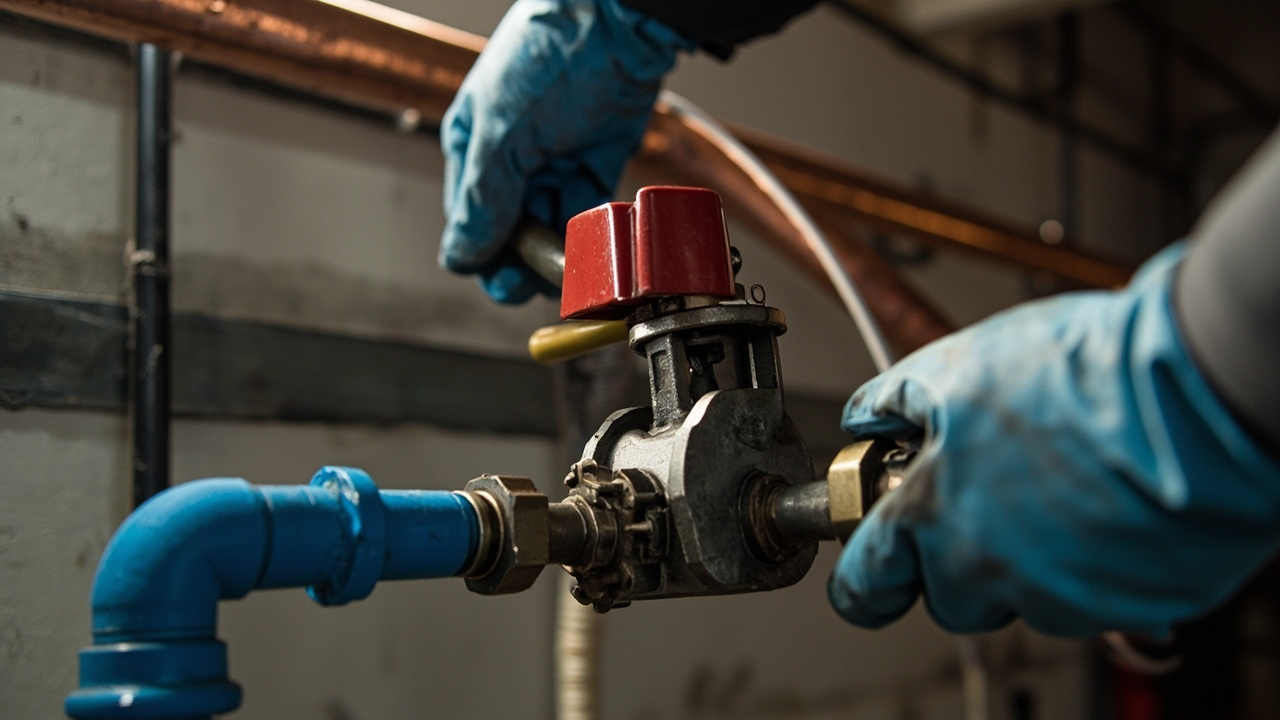
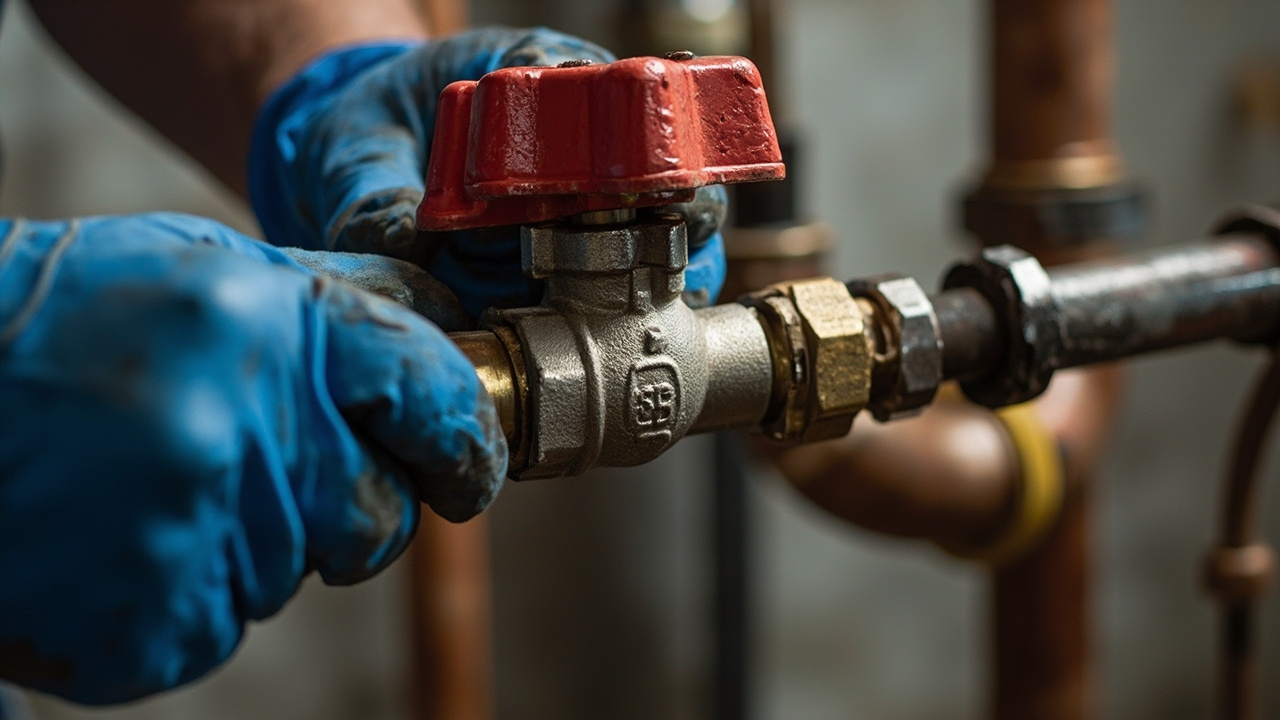
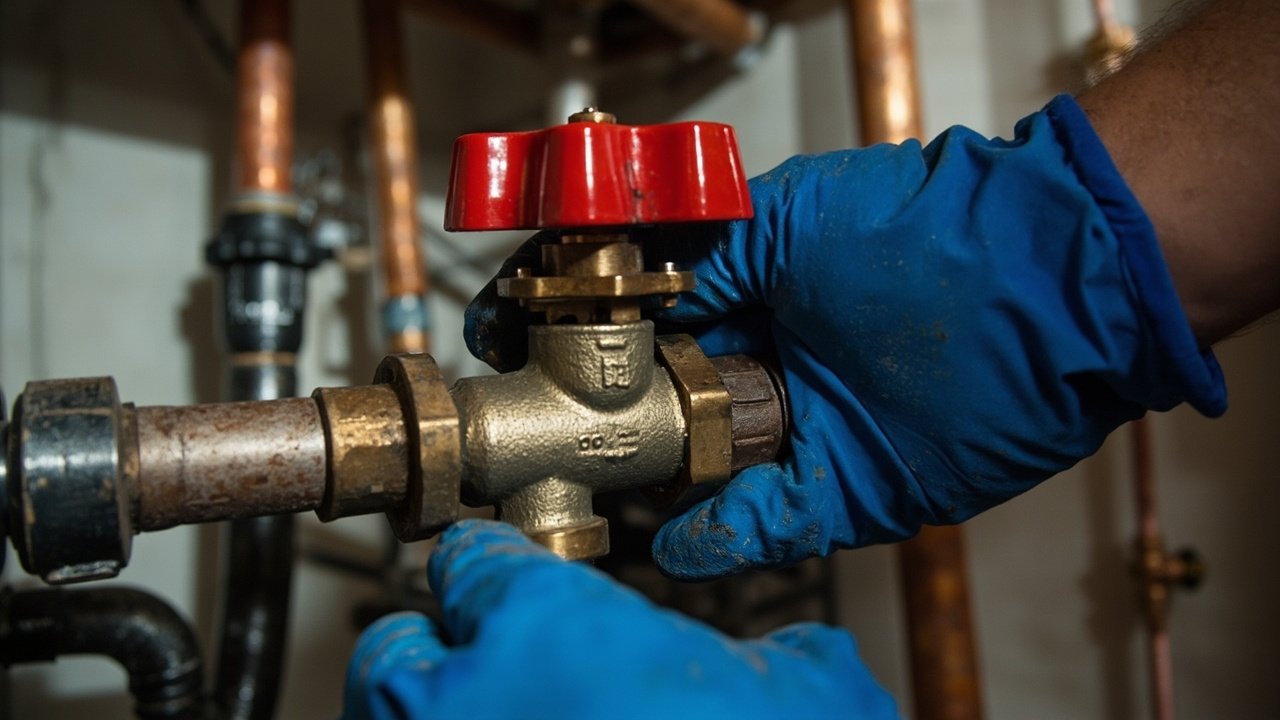
Two valve types dominate local installations. Gate valves have a round handle that turns counterclockwise to close. These require multiple full rotations. Ball valves have a lever handle that turns 90 degrees. A quarter turn from parallel to perpendicular closes the valve completely.

Before you touch the valve, clear the area. Remove storage, shelving, or anything blocking full access. You need room to apply force if the valve resists.

Turn the valve slowly. Gate valves close incrementally. Spin the handle counterclockwise, counting rotations. Most require three to five full turns. Listen for the change in water flow through the pipes. Ball valves close fast. Rotate the lever a quarter turn until it sits perpendicular to the pipe.

If the valve will not turn, do not force it. Corroded stems snap. Seized packing nuts strip. Apply penetrating oil and wait. Try again with steady pressure, not sudden force. If it still resists, call Peak Plumbing St. Louis at (314) 417-7677. We carry valve keys and have the leverage tools to operate frozen valves without damage.

After closing, verify shutoff by running a faucet. No water should flow once the system drains.

What Happens When You Need to Shut Off Your Main Water Line

How to Shut Off Main Water Valve in St. Louis – Step-by-Step Emergency Guidance When Every Second Counts
01

Locate the Valve

Walk to your basement or crawl space with a flashlight. Trace the main water line from where it enters through the foundation, typically near the street-facing wall. The shut off valve mounts before the meter. In older St. Louis homes, you may find it behind paneling or in a utility closet. Exterior valves sit in a ground box near the property line, but these belong to the city and require a valve key to operate.
02

Close the Valve

Turn a gate valve handle counterclockwise until it stops. This takes multiple rotations and you will feel increasing resistance as the gate drops into the flow path. For ball valves, rotate the lever handle 90 degrees clockwise until it points perpendicular to the pipe. Water flow stops immediately. Do not overtighten once the valve seats. Excess force damages internal components and makes future operation harder.
03

Verify Complete Shutoff

Open a faucet on the lowest floor to confirm no water flows. The system will drain residual pressure for 10 to 30 seconds, then stop completely. If water continues to trickle, the valve did not close fully or has failed internally. Attempt another quarter turn on a ball valve or additional rotation on a gate valve. Persistent flow means valve failure and you need professional replacement immediately.

Why St. Louis Homeowners Trust Peak Plumbing for Main Line Emergencies

You can turn off the water. But what happens next determines whether you face a simple repair or a total system replacement.

Peak Plumbing St. Louis has responded to hundreds of emergency shutoff calls across Shaw, Lafayette Square, and Richmond Heights. We know the common failure points in local housing stock. We have replaced enough corroded gate valves in Cherokee Street brick buildings to diagnose valve condition over the phone.

Our trucks carry replacement valves for every configuration installed in St. Louis homes since 1920. We stock ball valves, gate valves, and the obsolete ground-key valves still found in Compton Heights mansions. When we arrive, we bring the parts to fix the problem the same day.

St. Louis building code requires backflow preventers on main water lines in certain commercial applications, but residential installations vary. We assess your entire main line setup during every service call. If your shutoff valve is failing, we identify it before it fails completely. If your pressure reducing valve has drifted out of range, we catch it before it damages fixtures.

Local expertise matters. We understand how soil movement affects underground service lines in South County. We know which neighborhoods have galvanized supply lines prone to internal scaling. We recognize the symptoms of pressure surges from the municipal system that can crack fittings and stress valves.

Our technicians work in basements, crawl spaces, and mechanical rooms across the metro every day. We know how to access valves in tight spaces, work around finished ceilings, and make repairs without tearing apart your home.

When you need more than information, when you need a permanent fix, you need a plumber who has seen your exact problem in your exact type of home. That is what we deliver.

What to Expect When You Call Peak Plumbing St. Louis

Immediate Response Times

Peak Plumbing St. Louis answers emergency calls 24 hours a day, seven days a week. When you call (314) 417-7677 with a water emergency, you speak to a real person who can dispatch a technician immediately. We keep trucks staged across the metro to reach most St. Louis addresses within 60 minutes during active flooding situations. Non-emergency valve replacements can be scheduled same-day or next-day based on your availability. We do not make you wait three days while a leaking valve wastes water and drives up your bill.

Complete System Assessment

Our technicians do not just replace the broken part. We evaluate the entire main water assembly, including the curb stop, the service line entry, the main valve, the meter, the pressure regulator if present, and the first branch point. We test static pressure and check for pressure spikes that indicate regulator failure. We inspect for corrosion, mineral buildup, and mechanical wear. You receive a written assessment of what needs immediate attention and what can wait. This prevents surprise failures and gives you control over repair timing.

Quality Materials and Installation

We install quarter-turn ball valves with stainless steel balls and PTFE seats rated for 500,000 cycles. These outlast gate valves by decades and operate smoothly even after years of inactivity. All installations meet St. Louis County plumbing code and include proper support, accessible placement, and clear labeling. We use brass or bronze valve bodies, never plastic, and we install unions on both sides for easy future replacement. The work is clean, the connections are leak-free, and the valve operates smoothly the day we install it and ten years later.

Follow-Up and Maintenance Planning

After valve replacement, we test operation multiple times and verify complete shutoff. We walk you through the exact steps to operate your new valve and explain how to maintain it. We recommend exercising main shut off valves twice per year to prevent seizure and keep packing tight. We offer maintenance plans that include main line inspections, valve testing, and pressure checks to catch problems before they become emergencies. You also get direct access to our service team if you have questions about your system or notice changes in water pressure or quality.

Frequently Asked Questions

You Have Questions,
We Have Answers

How do I turn off the main water valve in my house? +

Locate your main shut-off valve, typically found near where the water line enters your home. Turn the valve clockwise to close it. Gate valves require several full rotations, while ball valves need only a quarter turn. Test the shut-off by running a faucet to confirm water stops flowing. In St. Louis homes, especially older properties in neighborhoods like Soulard or Tower Grove, valves can be stiff from years of mineral buildup. If the valve resists or leaks when turned, stop immediately and call a licensed plumber to avoid pipe damage or flooding.

Where is my main water shut off valve? +

Your main shut-off valve sits where the water line enters your home, usually in the basement along an exterior wall facing the street. In St. Louis homes, check near the water meter or foundation wall closest to the curb. Some properties have crawl spaces instead of basements, so look there. Older St. Louis homes built before 1950 may have valves in unusual spots due to renovations. You might also find an exterior shut-off near the foundation or sidewalk in a covered pit, though freezing temperatures make interior valves more common here.

What does the main water shut off valve look like? +

Main water valves come in two common types. A gate valve has a round handle that turns multiple times and sits on a pipe. A ball valve features a lever handle that turns 90 degrees, sitting inline or perpendicular when closed. Both are typically brass or bronze. In St. Louis, many older homes have gate valves that may show corrosion or mineral deposits from our hard water. The valve connects to the main supply line, usually three-quarters to one inch in diameter. You will see it before the water meter or immediately after.

Is it okay to shut off the main water valve? +

Yes, shutting off your main valve is safe and smart during plumbing emergencies, vacations, or repairs. Turn it off slowly to avoid water hammer damage to your pipes. In St. Louis, homeowners should shut off water when leaving during winter months to prevent freeze damage, especially in older homes without modern insulation. Exercise the valve twice yearly by turning it off and on to prevent mineral seizure from our hard water. If the valve is difficult to turn or leaks when operated, replace it before an emergency strikes.

Can you shut off your own water main? +

Yes, you can shut off your own water main at the valve inside your home. This is your property, and you control it. However, the curb stop valve at the street belongs to the water utility. In St. Louis, tampering with the curb valve is illegal and requires a special key. Stick to your interior shut-off for emergencies or maintenance. If your interior valve fails or you cannot locate it, contact your water provider or a plumber immediately. Never force a stuck valve, as you risk breaking it and creating a worse problem.

Why is water still running when the main valve is turned off? +

Water continues running after shutting the valve for several reasons. The valve may not be fully closed, so turn it further until it stops. Gate valves wear out internally, allowing water to seep past. Mineral buildup from St. Louis hard water can prevent complete closure. You might have multiple water sources, like a well system alongside city water. Another possibility is the wrong valve was shut off. If water persists after confirming full closure, the valve has failed and needs replacement. Call a plumber before the faulty valve causes flooding during an actual emergency.

Do all homes have a main water shut-off valve? +

Nearly all homes have a main shut-off valve, required by plumbing code. Older St. Louis homes built before modern codes might lack one, though this is rare. Properties in historic districts like Lafayette Square or the Central West End sometimes have unusual plumbing configurations from multiple renovations. Mobile homes may have different shut-off locations. If you cannot find a valve, check near the water meter, foundation walls, or crawl space. Contact your water utility for guidance. Installing a main shut-off valve improves safety and makes repairs easier, so add one if missing.

How do I find a hidden shutoff valve? +

Start at the water meter and trace the main supply line entering your home. In St. Louis basements, check along exterior walls facing the street, behind stored items, or in utility rooms. Look near the water heater, furnace, or foundation corners. Use a flashlight in crawl spaces or behind finished walls where access panels exist. Older homes sometimes hide valves behind paneling installed during renovations. In unfinished basements, follow the main line from where it penetrates the foundation. If you still cannot locate it, call a plumber to identify and mark it.

Where can I find main water shut off? +

The main water shut-off sits where the supply line enters your home. In St. Louis properties, check your basement along the wall closest to the street, near the water meter. Look for a valve on the main supply pipe before it branches to fixtures. Some homes have the valve in a crawl space or utility closet. Newer construction might place it in the garage. Older homes in neighborhoods like Dutchtown or South City sometimes have valves in unexpected spots due to remodeling. Locate it now before an emergency, and label it clearly.

Is my main water shut off valve by my water heater? +

The main shut-off is rarely by the water heater. You will find it where the supply line enters your home, usually along an exterior basement wall. The water heater has its own dedicated shut-off valve on the cold water inlet pipe, but this only stops water to that appliance. In St. Louis homes, the main valve sits upstream, closer to the foundation and water meter. Confusing these two valves is common. The main valve controls all water entering your property, while the heater valve isolates one fixture. Know the difference to respond correctly during emergencies.

How St. Louis Soil and Water Quality Affect Main Shut Off Valve Longevity

St. Louis municipal water has moderate hardness, typically ranging from 120 to 180 parts per million. This mineral content causes gradual calcium carbonate buildup inside valve bodies, particularly in gate valves where the gate slides through a tight channel. Over years, this scaling restricts valve movement and prevents complete closure. Homes south of Interstate 44, where clay soil holds more moisture against foundation walls, also see faster external corrosion on brass valve bodies. The combination of internal mineral deposits and external oxidation means main shut off valves in St. Louis homes have a functional lifespan of 15 to 25 years before they require replacement.

Peak Plumbing St. Louis has served residential and commercial customers across St. Louis County and City since our founding. We have built our reputation on transparent pricing, quality workmanship, and respect for your property. Our technicians know the difference between a Carondelet shotgun house and a Webster Groves colonial, and we tailor our approach to each structure. We pull permits when required, we coordinate with city inspectors, and we follow local code to the letter. When you hire a plumber in St. Louis, you want someone who knows the local infrastructure, understands the city's water system quirks, and can source parts for homes built a century ago. That is who we are.
Plumbing Services in The St. Louis Area

Peak Plumbing St. Louis is proud to serve the entire St. Louis metropolitan area and surrounding communities. Our dedicated team is strategically located to respond quickly to your residential and commercial plumbing needs. You can view our primary service area on the map below, but if you're located nearby and have a plumbing issue, don't hesitate to give us a call to see how we can assist you.

Address:
Peak Plumbing St. Louis, 4565 McRee Ave, St. Louis, MO, 63110

Additional Services We Offer

Our news updates

Latest Articles & News from The Blogs

Modernizing the Plumbing in a 100 Year Old Hyde Park Kitchen Hyde Park's historic charm comes with a unique plumbing…

Modernizing the Plumbing in a 100 Year Old Hyde Park Kitchen

Modernizing the Plumbing in a 100 Year Old Hyde Park Kitchen Hyde Park's historic charm comes with a unique plumbing…

Why Your Forest Park Southeast Condo Needs a Water Pressure Regulator

Why Your Forest Park Southeast Condo Needs a Water Pressure Regulator Living in a Forest Park Southeast condo means enjoying…

The Best Way to Hide Exposed Plumbing in Your Soulard Loft

The Best Way to Hide Exposed Plumbing in Your Soulard Loft Exposed pipes in your Soulard loft can clash with…

Contact Us

Do not wait for an emergency to find out your main valve has failed. Call Peak Plumbing St. Louis at (314) 417-7677 for valve testing, replacement, or emergency shutoff assistance. We are standing by 24 hours a day to protect your home.