




Menu

Emergency Main Water Line Break Repair in St. Louis – 24/7 Dispatch, On-Site Within Hours

When your main water line ruptures, every minute counts. Peak Plumbing St. Louis deploys licensed technicians around the clock to stop flooding, restore water service, and prevent foundation damage before your property suffers catastrophic loss.

Slider Image 1
Slider Image 2
Slider Image 3
Slider Image 4
Slider Image 5
Slider Image 7
Slider Image 8
Slider Image 9
Slider Image 10
Slider Image 11

What Happens When Your Main Water Line Breaks in St. Louis

You notice a sudden drop in water pressure, or worse, water pooling in your yard. Within minutes, that pooling becomes flooding. Your main water line carries pressurized municipal water from the street connection directly into your home. When it fails, the damage accelerates fast.

St. Louis sits on expansive clay soil that swells during wet seasons and shrinks during droughts. This constant movement stresses buried pipes. Add in freeze-thaw cycles that crack aging galvanized steel or cast iron lines, and you have a perfect recipe for underground water line failure. Tree roots from the region's mature oak and maple canopy infiltrate microscopic cracks, widening them until the pipe bursts completely.

A broken main water pipe does not just cut off your supply. It erodes soil beneath driveways, sidewalks, and foundations. It floods basements. It contaminates your yard with raw sewage if the break occurs near a lateral connection. Insurance adjusters will ask when you discovered the leak. The longer you wait, the more they deny.

Emergency water main repair is not a DIY project. The main line sits four to six feet underground. You need excavation equipment, pressure testing tools, and knowledge of local code requirements. You need someone who can coordinate water shut-off with the city, locate the break without destroying your landscaping, and restore service before your family goes another night without running water.

Peak Plumbing St. Louis handles water main leak repair across the metro, from the historic brick homes in Soulard to the sprawling properties in Chesterfield. We have seen what happens when homeowners wait. Do not be one of them.

What Happens When Your Main Water Line Breaks in St. Louis
How We Stop the Damage and Restore Your Water Service

How We Stop the Damage and Restore Your Water Service

The first step is stopping the water flow. We coordinate with St. Louis County or city utilities to shut down the main at the curb stop. If your property has an accessible valve at the street connection, we can isolate the break without affecting neighboring homes. This is where most handymen fail. They do not know the permit process, and they do not have the relationship with municipal inspectors to expedite shutdowns during emergencies.

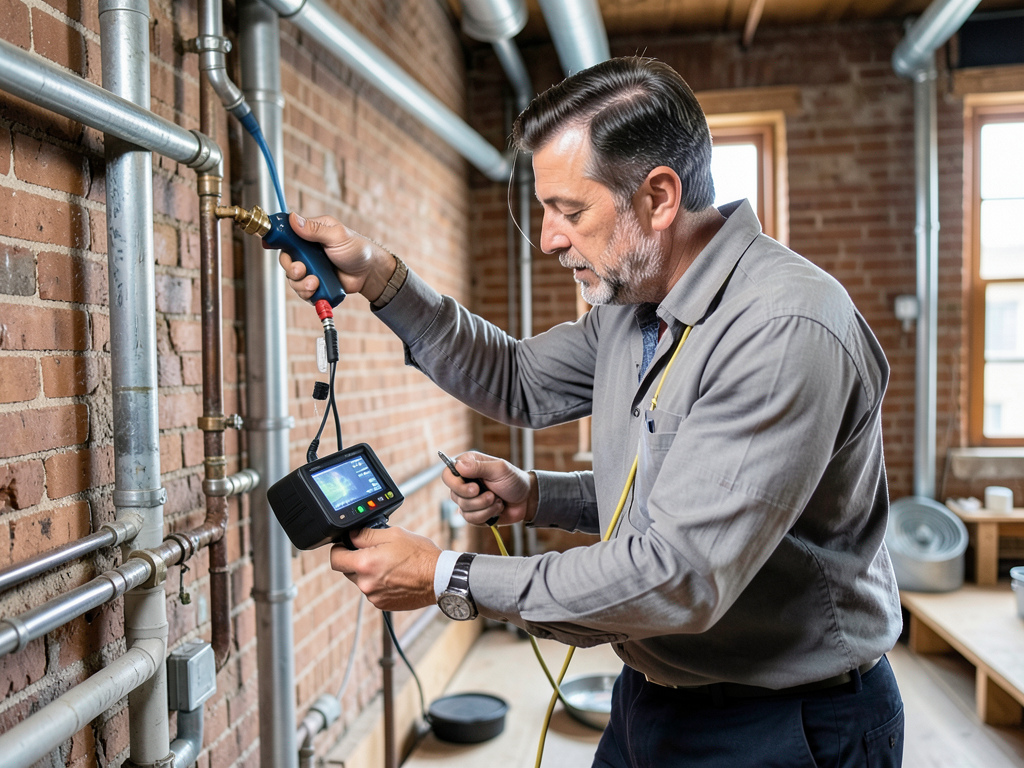
Next, we locate the exact failure point. We use electronic pipe locators and pressure testing to pinpoint the rupture without excavating your entire yard. St. Louis water mains typically run three to six feet deep, depending on frost line code requirements. We trench only where needed, preserving landscaping and hardscaping whenever possible.

For water service line repair, we assess whether the damage is isolated or symptomatic of systemic pipe degradation. If you have a 60-year-old galvanized line with multiple weak points, patching one break is a temporary fix. We give you the diagnostic truth. If the entire line needs replacement, we tell you. If a targeted repair will last another decade, we tell you that too.

We use schedule 40 PVC, HDPE, or copper for replacements, depending on soil conditions and local code. Clay soil requires flexible materials that can handle ground movement. We do not use rigid connections that will crack again in two years. Every joint is pressure-tested to 150 PSI before backfill.

After the repair, we restore water service and verify pressure at your fixtures. We coordinate required inspections with the city. We backfill with compacted soil to prevent settling, and we restore sod or gravel to match the existing grade. You get a system that works, not a cosmetic patch job that fails during the next hard freeze.

What Happens During Your Emergency Main Water Line Repair

Emergency Main Water Line Break Repair in St. Louis – 24/7 Dispatch, On-Site Within Hours
01

Immediate Water Shutoff

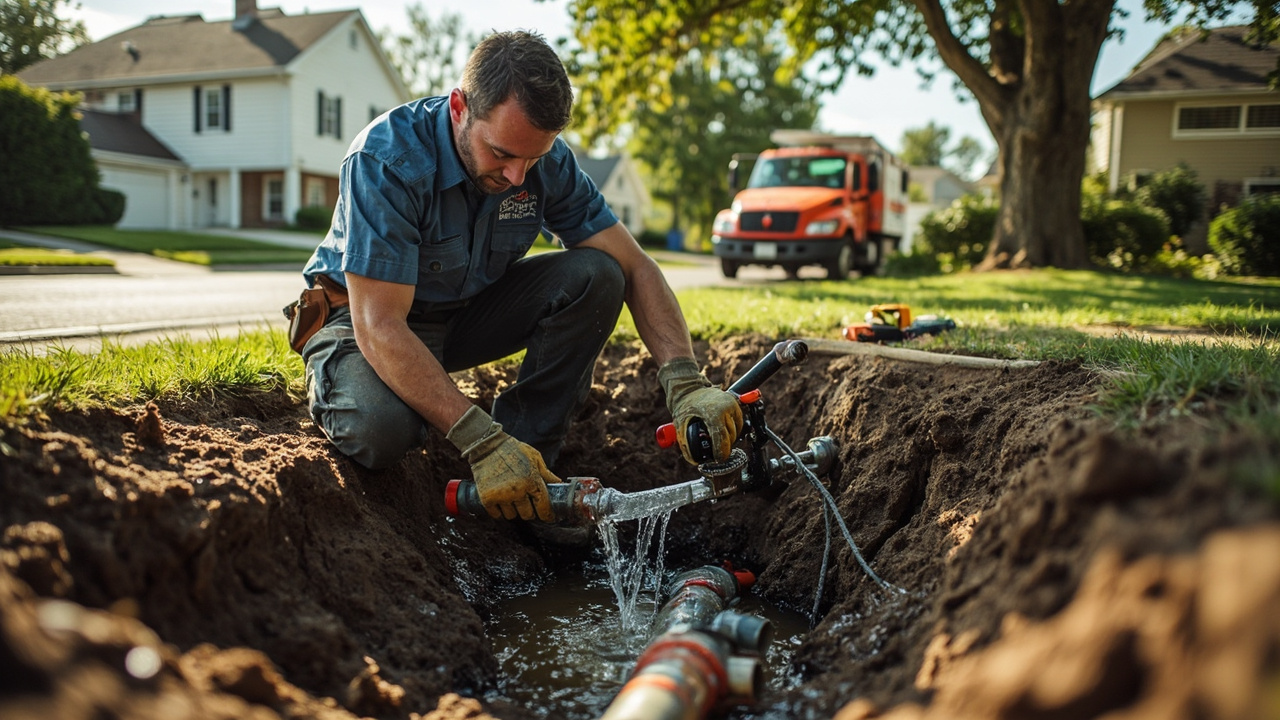
We arrive on-site, assess the severity of the break, and stop the water flow at the curb stop or main valve. This prevents further flooding and stabilizes the damage. We then mark utility lines to ensure safe excavation. If your basement is flooding, we deploy pumps to extract standing water while coordinating the shut-off with municipal authorities.
02

Excavation and Line Repair

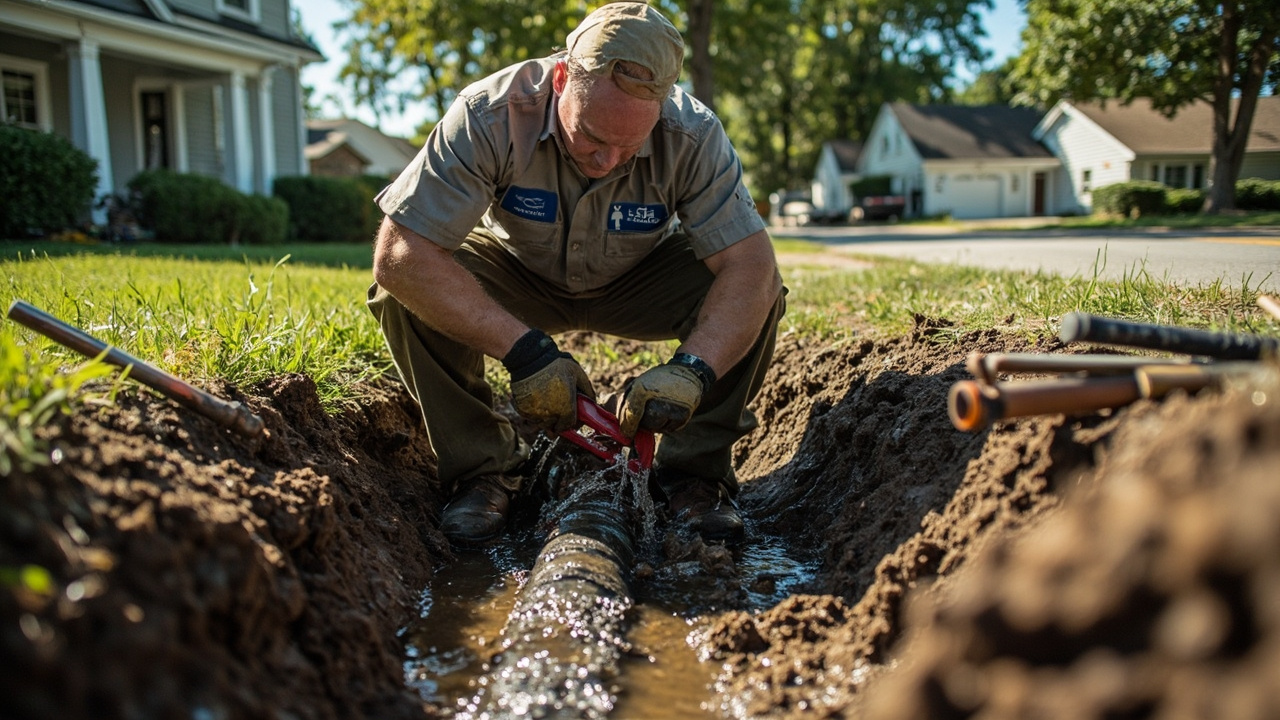
Using locator tools, we pinpoint the rupture and trench precisely to expose the damaged section. We cut out the failed segment, install new pipe with approved fittings, and pressure-test the repair to verify integrity. For full line replacements, we trench from the street connection to your foundation wall, ensuring proper slope and bedding for long-term stability in St. Louis clay soil.
03

Service Restoration and Inspection

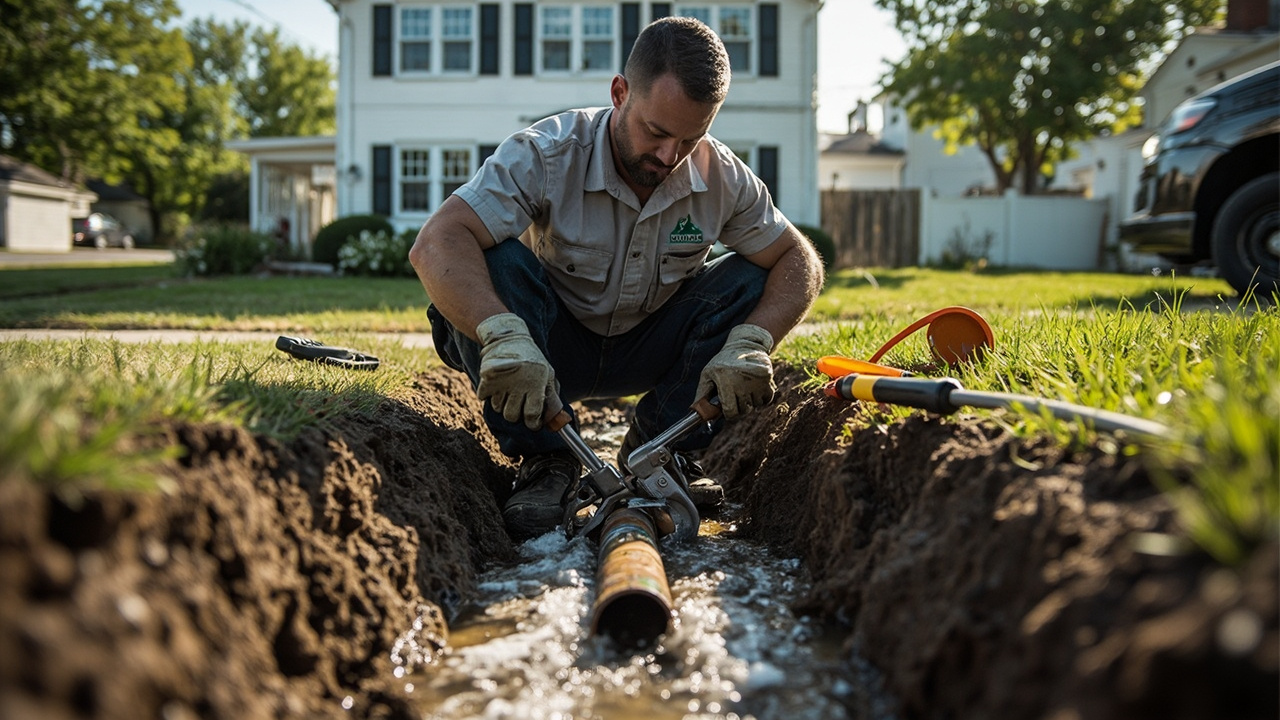
Once the repair passes pressure testing, we coordinate city inspection if required by permit. We restore water service, verify pressure at all fixtures, and backfill the trench with compacted material. We restore your yard to its original condition and provide documentation for insurance claims. You get your water back, your property protected, and peace of mind that the fix will hold.

Why St. Louis Homeowners Trust Peak Plumbing for Water Main Emergencies

When your main water line fails at 2 a.m., you do not have time to vet contractors. You need someone who answers the phone, shows up fast, and fixes it right. Peak Plumbing St. Louis operates 24/7 because water emergencies do not wait for business hours.

We know St. Louis plumbing. We know that homes built before 1960 in neighborhoods like Tower Grove and the Hill still have galvanized steel mains that are failing right now. We know that newer developments in St. Charles County used PVC that can crack under freeze-thaw stress. We know the difference between a city water main (which the municipality owns) and your private service line (which you own and must repair at your expense). Most homeowners do not know where that line of demarcation is until they get a surprise bill.

We have worked with every major insurer operating in the St. Louis metro. We document everything. We take photos of the break, the excavation, the repair, and the restoration. We provide itemized invoices that insurers accept without argument. We know what adjusters need to see, and we give it to them.

Our technicians are licensed in Missouri and trained in local code compliance. St. Louis County and the city have different requirements for backflow prevention, shut-off valve placement, and inspection protocols. We handle permits, inspections, and utility coordination so you do not have to navigate bureaucracy while your yard is flooded.

We also know when to say no. If your homeowner's insurance will cover a full line replacement, we do not push a patch job that will fail in three years. If your pipes are fine and you just need a coupling repair, we do not upsell you on a whole-house repipe. We give you the option that makes sense for your situation and your budget.

What You Can Expect From Start to Finish

Response Time and Availability

We dispatch within 30 minutes of your call, and most crews arrive on-site within two hours. For active flooding situations, we prioritize your emergency and mobilize immediately. We operate 24/7, including weekends and holidays. When you call, you speak to a dispatcher who understands plumbing, not an answering service reading a script. We give you an arrival window and a technician name. If conditions delay us, we call you with updates. You will not wait in the dark.

Assessment and Transparent Diagnosis

Before we dig, we assess the full scope. We locate the break, evaluate the condition of the surrounding pipe, and explain your options. We provide upfront pricing for both repair and replacement scenarios. If your insurance might cover the work, we walk you through documentation requirements and provide the estimates your adjuster needs. We do not start work until you understand what we are doing and why. No surprises, no hidden fees, no pressure tactics.

Quality of Repair and Materials

We use code-compliant materials rated for St. Louis soil and climate conditions. Every connection is pressure-tested before backfill. We do not use push-fit couplings that will leak in five years. We install shut-off valves at code-required intervals so future repairs do not require another full excavation. Our work passes inspection on the first attempt because we know what inspectors are looking for. You get a repair that will outlast your mortgage, not just survive the next billing cycle.

Follow-Up and Ongoing Support

After the repair, we provide documentation for your records and your insurer. If settling occurs in the trench area, we return to top off the backfill at no charge. We explain what to monitor and when to call us back. If you need preventive maintenance, water quality testing, or a whole-house inspection to check for other aging components, we schedule it at your convenience. We build relationships, not transactions. You become a client, not a one-time job number.

Frequently Asked Questions

You Have Questions,
We Have Answers

How much does it cost to fix a water main break? +

Main water line repair costs in St. Louis typically range from $1,500 to $5,000, depending on depth, pipe material, and access difficulty. Clay soil common in St. Louis can complicate excavation. Factors include excavation depth (usually 3 to 6 feet), pipe length needing replacement, and whether you need street or sidewalk restoration. Emergency repairs cost more than scheduled work. Galvanized steel and clay pipes (common in older St. Louis neighborhoods like Tower Grove and Shaw) often require full replacement rather than patching. Get a camera inspection first to avoid unnecessary digging and determine the exact problem location.

What to do if your main water line breaks? +

Shut off your main water valve immediately to stop flooding and prevent foundation damage. This valve is usually near your water meter or where the line enters your home. Call an emergency plumber right away. Do not attempt DIY repairs on pressurized main lines. Document the damage with photos for insurance claims. Move valuables away from affected areas. If water reaches your foundation or basement (common in St. Louis homes with basements), start water extraction quickly to prevent mold in our humid climate. Avoid using any water until a licensed plumber inspects the system and confirms repairs are complete.

How do you fix a broken underground water line? +

Fixing underground water lines requires excavation to expose the damaged section. A licensed plumber locates the break using pressure testing or camera inspection, then digs a trench to access the pipe. The damaged section is cut out and replaced with new pipe (usually PEX or copper). In St. Louis, freeze-thaw cycles and shifting clay soil cause most underground breaks. Trenchless pipe bursting or slip-lining may work for certain conditions, avoiding full excavation. After repair, the plumber pressure tests the system, disinfects the line, and backfills the trench. Soil compaction matters to prevent future settling, especially in our expansive clay soils.

How much does it cost to fix a burst water pipe underground? +

Repairing a burst underground pipe in St. Louis costs between $1,500 and $4,500 on average. Depth and location drive the price. Pipes under driveways or landscaping cost more due to restoration work. Clay soil excavation requires specialized equipment. Older homes in neighborhoods like Soulard or Lafayette Square often have deeper lines (4 to 6 feet), increasing labor costs. Trenchless repairs may reduce costs if conditions allow. Emergency calls after hours or weekends add premium charges. Material choice matters: PEX costs less than copper but both outlast galvanized steel common in pre-1960 St. Louis construction. Always get multiple quotes before approving work.

Does homeowners insurance cover main water line break? +

Most homeowners insurance policies in Missouri do not cover main water line breaks unless caused by a covered peril like vandalism or vehicle impact. Standard policies exclude damage from maintenance issues, freezing (if home was vacant), or age-related deterioration. Your policy may cover interior water damage from a sudden break, but not the excavation and pipe replacement itself. Some insurers offer optional water line coverage or endorsements. Review your policy carefully or call your agent immediately after a break. In St. Louis, where freeze-thaw cycles accelerate pipe aging, consider optional service line coverage to avoid surprise four-figure repair bills.

How long does it typically take to fix a water main break? +

Most main water line repairs in St. Louis take 4 to 8 hours for straightforward breaks. Complex jobs requiring deep excavation, concrete cutting, or extensive pipe replacement can take 1 to 3 days. Timeline depends on pipe depth, soil conditions (clay soil slows digging), and permit requirements. Emergency repairs start immediately, but full restoration including landscaping or driveway work extends the timeline. Trenchless methods may reduce time by half. Weather delays excavation work during heavy rain or frozen ground in winter months. A licensed plumber provides a realistic timeline after inspecting the break location and assessing access challenges specific to your property.

Who is responsible for fixing a water main break? +

Responsibility depends on where the break occurs. In St. Louis, homeowners own and maintain the water line from the main (usually under the street) to their home, including the curb stop. The city owns the main itself and the connection at the street. If the break occurs in your service line (your property), you pay for repairs. If it occurs in the city main, St. Louis water department handles it. Breaks at the connection point require coordination. Always call a licensed plumber first to locate the problem. They will contact the city if needed and handle permit requirements for street excavation work.

Will insurance pay for sewer line replacement? +

Homeowners insurance typically does not cover sewer line replacement in Missouri. Policies exclude maintenance, wear and tear, and gradual deterioration. Tree root intrusion, bellied pipes, and age-related collapse are not covered perils. Some insurers offer optional sewer and water line endorsements for added premium. If a covered event like a vehicle crash damages your sewer line, you may have coverage. In St. Louis, clay sewer lines installed before 1980 are prone to root infiltration and offset joints. Consider optional coverage or a home warranty that includes exterior lines to avoid surprise costs ranging from $3,000 to $10,000 for full replacement.

Is it safe to use water after a water main break? +

Do not use water until your plumber confirms repairs are complete and the system is disinfected. After a main line break, dirt, bacteria, and debris can enter the pipe during excavation. Licensed plumbers flush and chlorinate the line before restoring service. St. Louis water pressure may fluctuate during nearby main breaks, causing sediment in your lines. If the city issues a boil order for your area, follow it strictly. Once repairs finish, run cold water taps for several minutes to clear the lines. Check for discoloration or odor. If problems persist, contact your plumber immediately before using water for drinking or cooking.

Does home insurance cover underground water leaks? +

Standard homeowners insurance in Missouri generally excludes underground water leaks from coverage unless caused by a sudden, accidental covered peril. Slow leaks, corrosion, and pipe deterioration fall under maintenance exclusions. Your policy may cover resulting damage to your home's interior (like foundation cracks or mold), but not the excavation and pipe repair itself. Optional service line coverage endorsements exist but require adding them before a loss occurs. In St. Louis, where shifting clay soil and freeze-thaw cycles stress underground pipes, review your policy annually. Document any sudden leaks immediately with photos and call your insurance agent to clarify coverage before authorizing repairs.

Why St. Louis Clay Soil and Freeze-Thaw Cycles Destroy Buried Water Lines

St. Louis sits on expansive clay soil that absorbs water and swells during spring rains, then contracts during summer droughts. This cycle creates ground movement that stresses rigid pipes. Add winter freeze-thaw cycles that penetrate below the frost line, and older galvanized or cast iron mains develop stress fractures. Trees common to the region, including oaks, maples, and sycamores, send roots deep into the soil searching for water. Those roots infiltrate existing cracks, widening them until the pipe bursts. If your home was built before 1980, your main water line is likely nearing the end of its functional lifespan.

St. Louis city code requires licensed plumbers to pull permits for any main line work that exceeds minor coupling repairs. The city also mandates inspections to verify backflow prevention and proper shut-off valve installation. Peak Plumbing St. Louis maintains active permits and strong working relationships with municipal inspectors across the metro. We know the code, we know the inspectors, and we know how to get your repair approved without delays. Choosing a local contractor means choosing someone who understands the regulatory environment and can navigate it efficiently during an emergency.
Plumbing Services in The St. Louis Area

Peak Plumbing St. Louis is proud to serve the entire St. Louis metropolitan area and surrounding communities. Our dedicated team is strategically located to respond quickly to your residential and commercial plumbing needs. You can view our primary service area on the map below, but if you're located nearby and have a plumbing issue, don't hesitate to give us a call to see how we can assist you.

Address:
Peak Plumbing St. Louis, 4565 McRee Ave, St. Louis, MO, 63110

Additional Services We Offer

Our news updates

Latest Articles & News from The Blogs

Modernizing the Plumbing in a 100 Year Old Hyde Park Kitchen Hyde Park's historic charm comes with a unique plumbing…

Modernizing the Plumbing in a 100 Year Old Hyde Park Kitchen

Modernizing the Plumbing in a 100 Year Old Hyde Park Kitchen Hyde Park's historic charm comes with a unique plumbing…

Why Your Forest Park Southeast Condo Needs a Water Pressure Regulator

Why Your Forest Park Southeast Condo Needs a Water Pressure Regulator Living in a Forest Park Southeast condo means enjoying…

The Best Way to Hide Exposed Plumbing in Your Soulard Loft

The Best Way to Hide Exposed Plumbing in Your Soulard Loft Exposed pipes in your Soulard loft can clash with…

Contact Us

Do not let a broken main water line flood your property and rack up thousands in damage. Call Peak Plumbing St. Louis at (314) 417-7677 right now. We dispatch immediately, stop the flooding, and restore your water service fast.