
Comparing Whole House Water Filters vs Under-Sink Systems in Frontenac
Frontenac homeowners face unique water quality challenges from the Missouri River watershed that require careful system selection. Whole house filtration treats every drop entering your home while under-sink systems target specific drinking water needs. Understanding these differences helps you make the right investment for your family’s health and your home’s plumbing infrastructure. Why Kirkwood Homeowners Keep Calling Us for Stubborn Drain Clogs.
Frontenac Water Quality: What You’re Actually Dealing With
Frontenac’s water comes primarily from Missouri American Water, which sources from the Missouri River and local wells. The water travels through aging distribution pipes in older neighborhoods near Spoede Road and contains elevated levels of chlorine, chloramines, and sediment. Seasonal algae blooms in the river system create taste and odor issues that peak during late summer months. Replacing Old Iron Pipes in Historic Webster Groves Homes.
Hard water minerals like calcium and magnesium measure between 12-15 grains per gallon in most Frontenac homes. This level causes scale buildup in water heaters, reduces soap effectiveness, and leaves spots on dishes and fixtures. The high mineral content also accelerates wear on plumbing fixtures and appliances. How to Get a Same-Day Water Heater Repair in Sunset Hills.
Lead service lines exist in some Frontenac properties built before 1950, particularly in the older sections near the original town center. While the municipal treatment plant maintains proper pH levels to minimize leaching, older homes remain vulnerable to lead contamination through corroded pipes.
How Whole House Filtration Works in Frontenac Homes
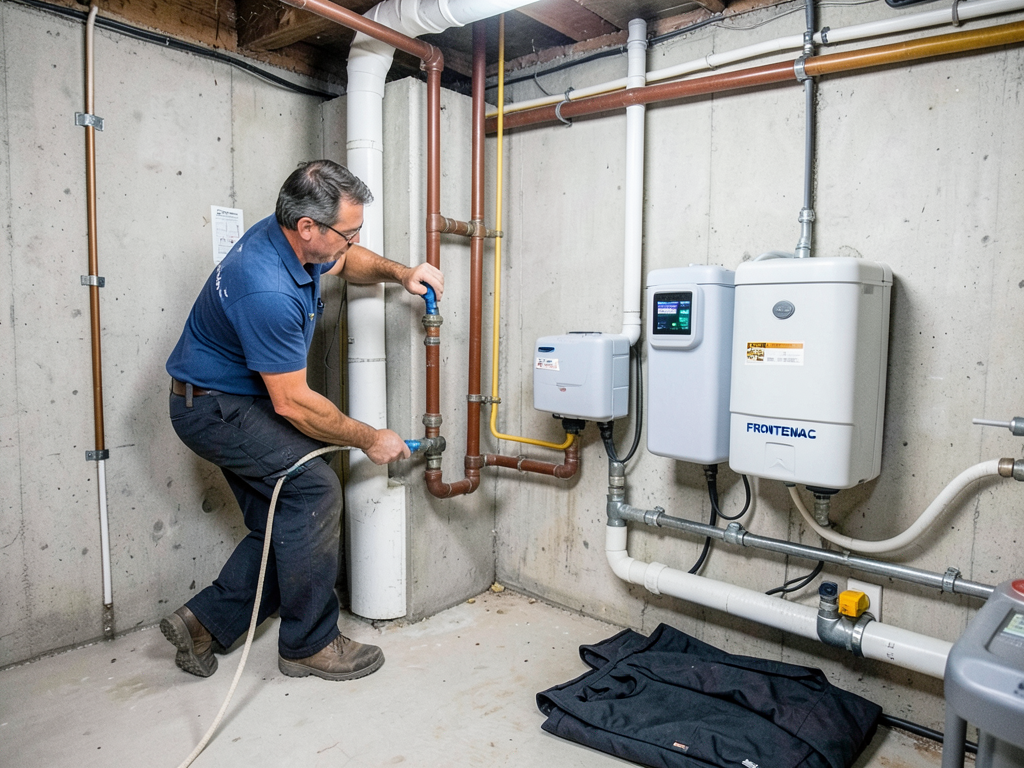
Whole house systems install at the main water line where it enters your home, typically in the basement or mechanical room. These systems use multiple stages including sediment pre-filters, activated carbon filters, and sometimes UV sterilization. The entire system processes water at 10-15 gallons per minute to maintain normal household flow rates. How to Stop Your Ballwin Basement From Flooding During Heavy Spring Rains.
Installation requires cutting the main water line and installing bypass valves for maintenance. The system typically occupies 2-3 feet of wall space and needs a floor drain nearby for backwashing cycles. Most Frontenac homes have adequate space in basements built with poured concrete walls that provide stable mounting surfaces. Professional Gas Line Installation for Your New Outdoor Kitchen in Wildwood.
Maintenance involves replacing sediment filters every 3-6 months and carbon filters annually. The cost runs approximately $150-300 per year for replacement filters. Some systems include automatic backwashing features that extend filter life but require connection to a floor drain and periodic salt replenishment for water softeners.
Under-Sink System Technology and Installation
Under-sink systems use reverse osmosis or advanced carbon filtration to produce drinking water at a single faucet. These systems typically include a pre-filter, RO membrane, post-carbon filter, and storage tank. The RO process removes 95-99% of dissolved solids including lead, arsenic, and fluoride. Reverse Osmosis Filtration Guide.
Installation requires drilling a hole in the sink or countertop for the dedicated faucet. The system connects to the cold water line and drains through the existing plumbing. Most units fit in standard 36-inch base cabinets, though some require additional space for the pressurized storage tank.
Water production rates vary by system size. A typical under-sink RO system produces 50-75 gallons per day, sufficient for drinking, cooking, and limited other uses. The system stores 2-3 gallons of filtered water to ensure immediate availability when the faucet opens.
Cost Comparison: Frontenac Installation and Operating Expenses
Initial installation costs differ significantly between system types. Whole house systems range from $1,500-4,000 installed, depending on home size and filtration stages. Under-sink RO systems cost $300-800 installed for the drinking water setup alone.
Annual operating costs include electricity for pumps, replacement filters, and potential water waste. Whole house systems typically add $5-10 monthly to utility bills. Under-sink RO systems waste 3-4 gallons of water for every gallon produced, increasing water bills by approximately $10-15 monthly.
Maintenance intervals affect long-term costs. Whole house systems require professional service annually at $150-250. Under-sink systems need filter changes every 6-12 months at $50-150 per service. The RO membrane requires replacement every 2-3 years at $100-200.
Water Quality Benefits: What Each System Actually Removes
Whole house systems excel at removing sediment, chlorine, and larger particles that affect water taste and odor throughout the home. These systems protect plumbing fixtures, water heaters, and appliances from scale buildup and staining. However, they typically remove only 50-70% of dissolved solids and cannot eliminate lead if present in service lines.
Under-sink RO systems achieve superior contaminant removal for drinking water. They eliminate lead, arsenic, fluoride, nitrates, and dissolved salts that whole house systems cannot address. The purified water improves coffee and tea taste, enhances cooking results, and provides peace of mind for families with young children or health concerns.
Neither system removes all contaminants. Chloramines require specialized carbon filters. Some pesticides and industrial chemicals need specific treatment media. Water testing determines which contaminants require targeted removal beyond standard filtration.
Space Requirements and Installation Considerations
Whole house systems need dedicated mechanical room space with access to the main water line. Frontenac homes typically have basements with 8-foot ceilings that accommodate vertical filter housings. The installation location must allow for cartridge changes and system maintenance without moving heavy equipment.. Read more about Is Your Shaw Neighborhood Home Still Using Lead Water Pipes?.
Under-sink systems require cabinet space that many Frontenac kitchens provide. However, some older homes have limited cabinet depth or plumbing configurations that complicate installation. The RO storage tank needs 3-4 inches of additional height beyond the filter unit.
Water pressure affects both systems differently. Whole house filters must maintain 40-80 psi throughout the home. Under-sink RO systems work best at 40-65 psi and include booster pumps for low-pressure situations common in some Frontenac neighborhoods.
Environmental Impact and Sustainability
Whole house systems waste minimal water since they treat all incoming water. The environmental impact comes from filter cartridge disposal and the energy required for manufacturing replacement parts. These systems reduce bottled water consumption by providing better-tasting water for all household uses.
Under-sink RO systems waste significant water during the purification process. The typical 3:1 waste ratio means 75% of processed water goes down the drain. However, this waste often replaces even greater water consumption from bottled water production and transportation.
Filter disposal creates environmental concerns for both systems. Carbon filters contain activated carbon that cannot be recycled. Sediment filters trap contaminants that require proper disposal. Some manufacturers now offer recycling programs for used cartridges.
Frontenac-Specific Installation Challenges
Older Frontenac homes near the original town center present unique installation challenges. Many properties have galvanized steel pipes that complicate cutting into the main water line. The presence of lead service lines requires specialized procedures to prevent contamination during installation.
Hard water scale buildup in existing plumbing affects system performance. Scale deposits in pipes reduce water flow and create pressure drops that impact filter efficiency. Some Frontenac homes need pre-treatment with water softeners before installing filtration systems.
Seasonal water quality changes affect system sizing. Missouri River water quality varies throughout the year, with turbidity spikes during spring runoff and algae blooms in late summer. Systems must handle worst-case scenarios while maintaining efficiency during normal conditions.
Maintenance Requirements and Service Intervals
Whole house systems require quarterly sediment filter changes and annual carbon filter replacement. The pre-filter catches rust, sand, and debris from aging distribution pipes. Neglecting this maintenance reduces system efficiency and allows contaminants to reach household plumbing.
Under-sink RO systems need more frequent attention. Pre-filters require replacement every 6 months, while the RO membrane lasts 2-3 years. The storage tank requires sanitization annually to prevent bacterial growth. Post-carbon filters need replacement every 12 months.
Water testing helps determine actual maintenance needs. Homes with higher sediment levels need more frequent pre-filter changes. Properties with elevated lead levels require more frequent monitoring of RO system performance.
Making the Right Choice for Your Frontenac Home
Whole house filtration suits families who want better water everywhere and protect plumbing investments. These systems work well for homes with hard water issues, sediment problems, or chlorine sensitivity. The upfront cost provides long-term protection for water heaters, dishwashers, and washing machines.
Under-sink RO systems fit households prioritizing drinking water quality over whole-home treatment. These systems excel for families with health concerns, young children, or specific contaminant removal needs. The lower initial cost allows allocation of budget to other home improvements.
Many Frontenac homeowners install both systems. Whole house filtration protects plumbing and provides better bathing water while under-sink RO ensures safe drinking water. This combination addresses all water quality concerns but increases total investment to $2,500-5,000.
Professional Installation: Why DIY Often Fails
Professional installation ensures proper system sizing and code compliance. Missouri plumbing code requires licensed contractors for water line modifications. Improper installation creates cross-connection risks, violates local ordinances, and voids manufacturer warranties.
System sizing requires accurate water usage calculations. A family of four uses 300-400 gallons daily, but peak demand periods determine actual system requirements. Undersized systems cause pressure drops and inadequate flow rates.
Water testing before installation identifies specific contaminants requiring targeted treatment. Generic systems cannot address unique local water quality issues. Professional testing reveals problems that affect system selection and sizing.
Frequently Asked Questions
How long do water filtration systems last in Frontenac?
Quality whole house systems last 10-15 years with proper maintenance. The filter housings and valves typically outlast the filter media. Under-sink RO systems last 5-10 years, with the RO membrane requiring replacement every 2-3 years.
Will water filtration affect my water pressure?
Properly sized systems maintain normal pressure. However, clogged filters or undersized units can cause pressure drops. Most Frontenac homes have adequate pressure for filtration, though some older properties may need booster pumps.
Do I need a water softener with my filtration system?
Hard water in Frontenac often requires both systems. Water softeners remove calcium and magnesium before filtration, extending filter life and improving soap effectiveness. Some whole house systems combine softening and filtration in single units.
How much does water testing cost in Frontenac?
Professional water testing ranges from $150-400 depending on contaminant panels. Basic testing covers common issues like hardness, chlorine, and lead. Comprehensive testing for specific contaminants costs more but provides essential information for system selection.
Take Action Today
Don’t wait for water quality issues to damage your plumbing or affect your family’s health. Call (314) 417-7677 today to schedule your free water quality assessment and receive a customized filtration recommendation for your Frontenac home. Our licensed plumbers understand local water conditions and can install the right system the first time.
Protect your home’s plumbing, improve your water quality, and enjoy peace of mind knowing your family has safe, clean water. Pick up the phone and call (314) 417-7677 before the next water quality issue affects your home. We serve Frontenac and all surrounding St. Louis communities with professional water filtration solutions. For more information, visit EPA Safe Drinking Water Act.
You may also find this helpful. Stopping a Leaking Ice Maker Line Before it Ruins Your Oakville Kitchen Floor.
{
“@context”: “https://schema.org”,
“@type”: “BlogPosting”,
“headline”: “Comparing Whole House Water Filters vs Under-Sink Systems in Frontenac”,
“description”: “Compare whole house water filters vs under-sink systems for Frontenac homes. Learn local water quality, installation costs, and which system protects your family best.”,
“wordCount”: 1807,
“datePublished”: “2026-03-15T14:32:00.000Z”,
“dateModified”: “2026-03-15T14:32:00.000Z”,
“inLanguage”: “en-US”,
“mainEntityOfPage”: {
“@type”: “WebPage”,
“@id”: “https://peakplumbingstlouis.com”
},
“publisher”: {
“@type”: “LocalBusiness”,
“name”: “Peak Plumbing St. Louis”,
“url”: “https://peakplumbingstlouis.com”
},
“author”: {
“@type”: “Organization”,
“name”: “Peak Plumbing St. Louis”,
“url”: “https://peakplumbingstlouis.com”
},
“image”: {
“@type”: “ImageObject”,
“url”: “https://peakplumbingstlouis.com/wp-content/uploads/2026/03/comparing-whole-house-water-filters-vs-under-sink-1.png”
}
}
{
“@context”: “https://schema.org”,
“@type”: “Plumber”,
“name”: “Peak Plumbing St. Louis”,
“url”: “https://peakplumbingstlouis.com”,
“address”: {
“@type”: “PostalAddress”,
“addressLocality”: “St. Louis”
},
“areaServed”: {
“@type”: “City”,
“name”: “St. Louis”
}
}
{
“@context”: “https://schema.org”,
“@type”: “FAQPage”,
“mainEntity”: [
{
“@type”: “Question”,
“name”: “How long do water filtration systems last in Frontenac?”,
“acceptedAnswer”: {
“@type”: “Answer”,
“text”: “Quality whole house systems last 10-15 years with proper maintenance. The filter housings and valves typically outlast the filter media. Under-sink RO systems last 5-10 years, with the RO membrane requiring replacement every 2-3 years.”
}
},
{
“@type”: “Question”,
“name”: “Will water filtration affect my water pressure?”,
“acceptedAnswer”: {
“@type”: “Answer”,
“text”: “Properly sized systems maintain normal pressure. However, clogged filters or undersized units can cause pressure drops. Most Frontenac homes have adequate pressure for filtration, though some older properties may need booster pumps.”
}
},
{
“@type”: “Question”,
“name”: “Do I need a water softener with my filtration system?”,
“acceptedAnswer”: {
“@type”: “Answer”,
“text”: “Hard water in Frontenac often requires both systems. Water softeners remove calcium and magnesium before filtration, extending filter life and improving soap effectiveness. Some whole house systems combine softening and filtration in single units.”
}
},
{
“@type”: “Question”,
“name”: “How much does water testing cost in Frontenac?”,
“acceptedAnswer”: {
“@type”: “Answer”,
“text”: “Professional water testing ranges from $150-400 depending on contaminant panels. Basic testing covers common issues like hardness, chlorine, and lead. Comprehensive testing for specific contaminants costs more but provides essential information for system selection.”
}
}
]
}
{
“@context”: “https://schema.org”,
“@type”: “BreadcrumbList”,
“itemListElement”: [
{
“@type”: “ListItem”,
“position”: 1,
“name”: “Home”,
“item”: “https://peakplumbingstlouis.com”
},
{
“@type”: “ListItem”,
“position”: 2,
“name”: “Blog”,
“item”: “https://peakplumbingstlouis.com/blog”
},
{
“@type”: “ListItem”,
“position”: 3,
“name”: “Comparing Whole House Water Filters vs Under-Sink Systems in Frontenac”
}
]
}
{
“@context”: “https://schema.org”,
“@type”: “Service”,
“serviceType”: “Plumbing”,
“provider”: {
“@type”: “LocalBusiness”,
“name”: “Peak Plumbing St. Louis”,
“url”: “https://peakplumbingstlouis.com”
},
“areaServed”: {
“@type”: “City”,
“name”: “St. Louis”
},
“description”: “Compare whole house water filters vs under-sink systems for Frontenac homes. Learn local water quality, installation costs, and which system protects your family best.”
}