
How a Clogged Condensate Line Can Flood Your Crestwood Utility Closet
Your AC shuts off on a humid St. Louis afternoon. You check the thermostat, then hear a faint drip in the utility closet. A puddle spreads across the floor. This is how a clogged condensate line turns a simple HVAC issue into a plumbing emergency. Plumbing Florissant.
Condensate lines carry away moisture pulled from your home’s air. When they clog, water backs up into the drain pan and overflows. In older Crestwood homes near Grant’s Trail, where summer humidity often exceeds 75%, algae and mineral buildup in PVC pipes can block drainage within months. Replacing Old Iron Pipes in Historic Webster Groves Homes.
How to Spot a Blocked Condensate Line Before It Floods
Early signs include water pooling around your furnace, a musty odor near the air handler, or your AC shutting off unexpectedly. Most units have a float switch that stops the system when water rises too high. That safety feature prevents major damage but leaves you without cooling during a heatwave. How to Get a Same-Day Water Heater Repair in Sunset Hills.
Look for these symptoms:
- Standing water in the secondary drain pan
- Water stains on walls or ceiling near the unit
- AC won’t turn on despite a working thermostat
Why St. Louis Humidity Makes Condensate Lines Fail Faster
Missouri’s summer air holds more moisture than most regions. That extra humidity means your evaporator coil pulls more water from the air. Combined with hard water minerals common in St. Louis County, this creates perfect conditions for “white slime” bacterial growth inside drain lines.
Older Crestwood neighborhoods with mid-century homes often have longer drain runs through unconditioned spaces. These cool pipes sweat in summer, accelerating buildup. The Metropolitan Sewer District requires proper condensate disposal to avoid overloading sanitary sewers during heavy use periods.
Step-by-Step Guide to Unclogging the Line Yourself
Before calling a plumber, try these steps. Turn off power to the AC at the breaker. Locate the main drain line near your air handler—it’s usually a white PVC pipe with a T-shaped vent. Remove the cap and inspect for visible debris.
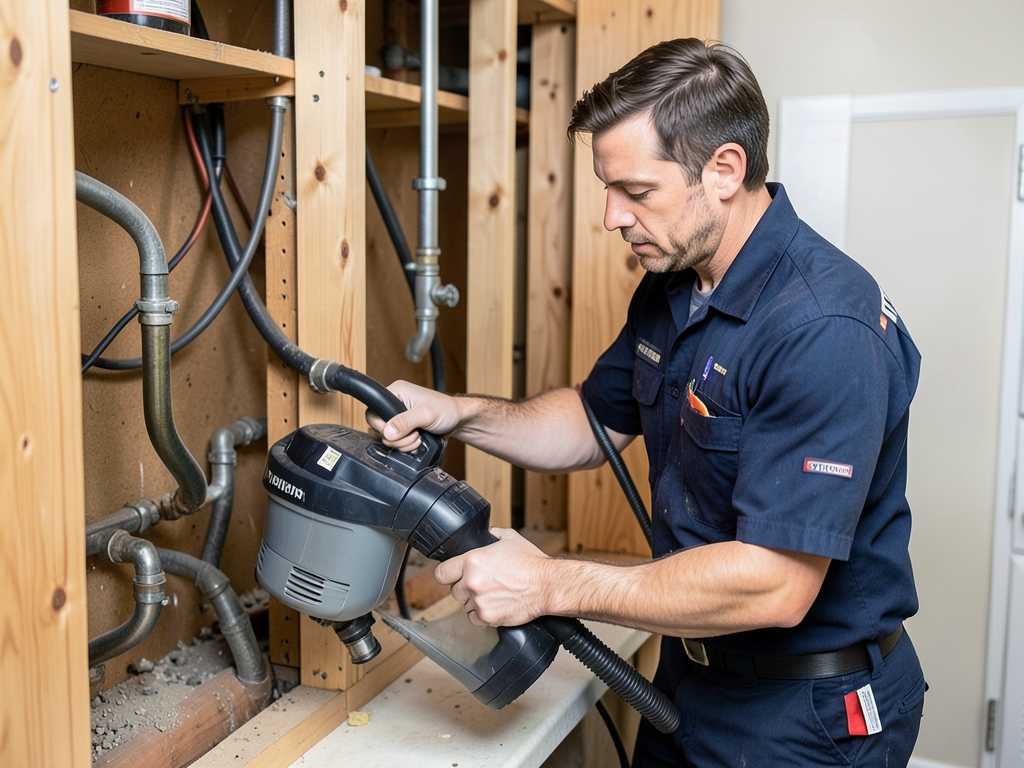
Attach a wet/dry vacuum to the drain line’s outdoor end. Seal the connection with duct tape for strong suction. Run the vacuum for 2-3 minutes to pull out clogs. If that fails, pour a cup of distilled white vinegar into the line and wait 30 minutes before flushing with warm water.
Warning: Never use chemical drain cleaners. They can damage PVC pipes and harm your HVAC system. Also, check your float switch operation—it should move freely and trigger the safety cutoff.
When to Call a St. Louis Plumbing Professional
Call a professional if water continues pooling after your DIY attempt, if you notice water damage to walls or flooring, or if your AC won’t restart even after clearing the line. These symptoms often indicate a failed condensate pump or a blockage deep within wall cavities. Professional Gas Line Installation for Your New Outdoor Kitchen in Wildwood.
Professional tools include nitrogen purging to blow out stubborn clogs and specialized suction equipment that reaches blockages traditional methods miss. A licensed plumber will also check for proper slope in drain lines—they should drop at least 1/4 inch per foot toward the drain.
Don’t wait until water reaches your electrical panel or causes mold growth. In Crestwood’s older homes, water damage can spread quickly through hardwood floors and into finished basements. How to Stop Your Ballwin Basement From Flooding During Heavy Spring Rains.
Preventive Maintenance Tips for Crestwood Homeowners
Prevent clogs with monthly vinegar flushes during cooling season. Pour 1 cup of distilled white vinegar into the vent tee, wait 30 minutes, then flush with water. Install pan tablets—they dissolve slowly and prevent algae growth inside the drain pan and lines.
Schedule annual HVAC maintenance that includes condensate line inspection. A technician will check for proper drainage, test the float switch, and clean the evaporator coil. This service typically costs $75-150 in the St. Louis area but prevents thousands in water damage repairs. EPA mold information.
Consider installing a secondary drain pan with a water alarm under your air handler. When water accumulates, the alarm sounds before flooding occurs. This simple addition costs under $50 and provides peace of mind during summer vacations.
Cost Comparison: DIY vs Professional Service
| Service Type | Typical Cost (STL) | Time Required | Success Rate |
|---|---|---|---|
| Wet/Dry Vac Method | $0-30 (equipment) | 30-60 minutes | 60% |
| Vinegar Flush | $2-5 | 45 minutes | 40% |
| Professional Service | $150-300 | 1-2 hours | 95% |
| Emergency Service | $250-450 | 1-4 hours | 98% |
Understanding Your AC’s Safety Features
Modern AC systems include multiple safety switches. The primary float switch sits in the main drain pan. When water reaches a certain level, it cuts power to the compressor. Some systems also have a secondary switch in the emergency overflow pan.
If your AC won’t turn on and you see water, the float switch likely activated. This prevents the unit from making more condensate while the drain line is blocked. Resetting the system without fixing the clog will only cause more flooding.
High-efficiency units in newer Crestwood homes may have electronic condensate sensors that send alerts to your phone when water is detected. These smart systems can prevent major damage by notifying you before overflow occurs.
Common Mistakes That Make Clogs Worse
Pouring bleach into the drain line seems logical but damages pipes and creates toxic fumes when mixed with other chemicals. Using a wire hanger to fish out clogs often pushes debris deeper or punctures the pipe. Ignoring the problem hoping it resolves itself leads to ceiling damage and mold growth.
Another mistake is assuming HVAC technicians handle all condensate issues. While they service the AC unit, plumbing codes require licensed plumbers to address drain line failures that cause water damage. This distinction matters for insurance claims and warranty coverage.
Finally, don’t cap the vent tee to stop odors. That vent equalizes pressure and allows proper drainage. Blocking it creates vacuum locks that prevent water from flowing out, causing exactly the backup you’re trying to prevent.
Local Building Code Requirements
St. Louis County plumbing code requires condensate lines to terminate at least 12 inches from any foundation and direct water away from the structure. Lines must maintain a minimum 1/4 inch per foot slope and use schedule 40 PVC for main drains. Secondary drain pans are mandatory for units in attics or above finished spaces.
The International Mechanical Code, adopted by Missouri, also mandates that condensate not create a nuisance or public health hazard. This means water cannot pool on walkways, create mosquito breeding grounds, or discharge near air intakes. International Association of Plumbing and Mechanical Officials.
Commercial buildings in Crestwood must follow stricter requirements, including condensate pumps for units below grade and alarm systems for secondary overflow pans.
Impact on Indoor Air Quality
A clogged condensate line doesn’t just cause water damage—it affects your home’s air quality. Standing water in drain pans breeds bacteria and mold spores. When your AC fan runs, it can distribute these contaminants throughout your home.
In Crestwood’s humid climate, mold can establish in 24-48 hours. Musty odors often indicate active mold growth in the drain pan or nearby insulation. This is especially problematic for households with allergies or respiratory issues.
Regular cleaning with vinegar not only clears clogs but also kills bacteria and mold spores. This simple maintenance step improves both system efficiency and indoor air quality.
Emergency Protocol During Heatwaves
When your AC shuts off during a St. Louis heatwave, act quickly. First, turn off the unit at the thermostat to prevent damage. Check for obvious water around the air handler. If you find water, don’t restart the system until the drain line is clear.
Use fans to circulate air and keep your home as cool as possible. Close blinds during the day to reduce heat gain. If temperatures become dangerous, especially for elderly residents or pets, consider temporary relocation to a cooling center.
Document any water damage with photos for insurance purposes. Contact a plumber immediately—most offer emergency service during heatwaves and can often arrive within 2-4 hours.
Professional vs DIY: Making the Right Choice
DIY methods work for simple clogs near the drain line’s access point. If you’re comfortable with basic tools and can safely access your air handler, trying the wet/dry vac method first makes sense. However, if you can’t locate the drain line, if the clog persists after your attempts, or if you notice water damage, call a professional.
Professional service includes warranty on repairs, proper disposal of contaminated water, and inspection for underlying issues. They can also identify if your system needs upgrades like larger drain lines or additional safety switches.
Consider your home’s age and system complexity. Newer high-efficiency units have more sensitive safety features and may require specialized knowledge to reset properly after a clog.
FAQ
How often should I clean my AC condensate line?
Clean your condensate line monthly during cooling season if you have hard water or notice musty odors. Annual professional maintenance should include drain line inspection and cleaning.
Can a clogged condensate line damage my AC unit?
Yes. When the float switch activates, your compressor stops working. Running the system with a blocked drain can cause the evaporator coil to freeze, potentially damaging the compressor and requiring expensive repairs.
What causes the white slime in my drain line?
The “white slime” is bacterial growth that thrives in the moist, dark environment of your drain line. High humidity and hard water minerals accelerate this growth. It’s different from algae, which appears green or brown.
Is vinegar safe for cleaning AC drain lines?
Yes, distilled white vinegar is safe and effective. It kills bacteria and dissolves mineral buildup without damaging PVC pipes. Avoid bleach, which can create toxic fumes and damage certain pipe materials.
How much does professional condensate line cleaning cost?
In the St. Louis area, professional cleaning typically costs $150-300. Emergency service during heatwaves or weekends may cost $250-450. Annual maintenance contracts often include this service for $75-150 per year.
Conclusion
A clogged condensate line can quickly escalate from a minor inconvenience to major water damage. In Crestwood’s humid climate, regular maintenance isn’t optional—it’s essential for protecting your home and keeping your AC running efficiently.
If you’re dealing with water around your air handler or your AC won’t turn on, don’t wait. Pick up the phone and call (314) 417-7677 before the next storm hits. Our licensed plumbers can clear your drain line, inspect for damage, and ensure your system is protected against future clogs.
Remember, water damage only gets worse with time. A quick professional inspection now can save you thousands in repairs later. Call (314) 417-7677 today to schedule your inspection and keep your Crestwood home dry and comfortable all summer long.
You may also find this helpful. The Best Way to Add a Utility Sink to Your Florissant Laundry Room.
{
“@context”: “https://schema.org”,
“@type”: “BlogPosting”,
“headline”: “How a Clogged Condensate Line Can Flood Your Crestwood Utility Closet”,
“description”: “A blocked AC drain line can cause serious water damage in your Crestwood home. Learn the warning signs, DIY fixes, and when to call a local plumber before it floods.”,
“wordCount”: 1799,
“datePublished”: “2026-04-06T12:22:00.000Z”,
“dateModified”: “2026-04-06T12:22:00.000Z”,
“inLanguage”: “en-US”,
“mainEntityOfPage”: {
“@type”: “WebPage”,
“@id”: “https://peakplumbingstlouis.com”
},
“publisher”: {
“@type”: “LocalBusiness”,
“name”: “Peak Plumbing St. Louis”,
“url”: “https://peakplumbingstlouis.com”
},
“author”: {
“@type”: “Organization”,
“name”: “Peak Plumbing St. Louis”,
“url”: “https://peakplumbingstlouis.com”
},
“image”: {
“@type”: “ImageObject”,
“url”: “https://peakplumbingstlouis.com/wp-content/uploads/2026/03/how-a-clogged-condensate-line-can-flood-your-crest-1.png”
}
}
{
“@context”: “https://schema.org”,
“@type”: “Plumber”,
“name”: “Peak Plumbing St. Louis”,
“url”: “https://peakplumbingstlouis.com”,
“address”: {
“@type”: “PostalAddress”,
“addressLocality”: “St. Louis”
},
“areaServed”: {
“@type”: “City”,
“name”: “St. Louis”
}
}
{
“@context”: “https://schema.org”,
“@type”: “FAQPage”,
“mainEntity”: [
{
“@type”: “Question”,
“name”: “How often should I clean my AC condensate line?”,
“acceptedAnswer”: {
“@type”: “Answer”,
“text”: “Clean your condensate line monthly during cooling season if you have hard water or notice musty odors. Annual professional maintenance should include drain line inspection and cleaning.”
}
},
{
“@type”: “Question”,
“name”: “Can a clogged condensate line damage my AC unit?”,
“acceptedAnswer”: {
“@type”: “Answer”,
“text”: “Yes. When the float switch activates, your compressor stops working. Running the system with a blocked drain can cause the evaporator coil to freeze, potentially damaging the compressor and requiring expensive repairs.”
}
},
{
“@type”: “Question”,
“name”: “What causes the white slime in my drain line?”,
“acceptedAnswer”: {
“@type”: “Answer”,
“text”: “The \”white slime\” is bacterial growth that thrives in the moist, dark environment of your drain line. High humidity and hard water minerals accelerate this growth. It’s different from algae, which appears green or brown.”
}
},
{
“@type”: “Question”,
“name”: “Is vinegar safe for cleaning AC drain lines?”,
“acceptedAnswer”: {
“@type”: “Answer”,
“text”: “Yes, distilled white vinegar is safe and effective. It kills bacteria and dissolves mineral buildup without damaging PVC pipes. Avoid bleach, which can create toxic fumes and damage certain pipe materials.”
}
},
{
“@type”: “Question”,
“name”: “How much does professional condensate line cleaning cost?”,
“acceptedAnswer”: {
“@type”: “Answer”,
“text”: “In the St. Louis area, professional cleaning typically costs $150-300. Emergency service during heatwaves or weekends may cost $250-450. Annual maintenance contracts often include this service for $75-150 per year.”
}
}
]
}
{
“@context”: “https://schema.org”,
“@type”: “BreadcrumbList”,
“itemListElement”: [
{
“@type”: “ListItem”,
“position”: 1,
“name”: “Home”,
“item”: “https://peakplumbingstlouis.com”
},
{
“@type”: “ListItem”,
“position”: 2,
“name”: “Blog”,
“item”: “https://peakplumbingstlouis.com/blog”
},
{
“@type”: “ListItem”,
“position”: 3,
“name”: “How a Clogged Condensate Line Can Flood Your Crestwood Utility Closet”
}
]
}
{
“@context”: “https://schema.org”,
“@type”: “Service”,
“serviceType”: “Plumbing”,
“provider”: {
“@type”: “LocalBusiness”,
“name”: “Peak Plumbing St. Louis”,
“url”: “https://peakplumbingstlouis.com”
},
“areaServed”: {
“@type”: “City”,
“name”: “St. Louis”
},
“description”: “A blocked AC drain line can cause serious water damage in your Crestwood home. Learn the warning signs, DIY fixes, and when to call a local plumber before it floods.”
}