






The Mississippi and Missouri Rivers carry dissolved limestone and gypsum through St. Louis water treatment plants. Filtration removes sediment but not dissolved minerals. Your water heater receives a steady flow of calcium carbonate and magnesium sulfate. These minerals attach to the anode rod, accelerating galvanic corrosion. In softer water regions, anode rods last five to seven years. In St. Louis, expect three to four years before complete degradation. Once the rod disappears, those corrosive minerals attack the steel tank directly. Hot water tank maintenance intervals must account for this accelerated timeline.
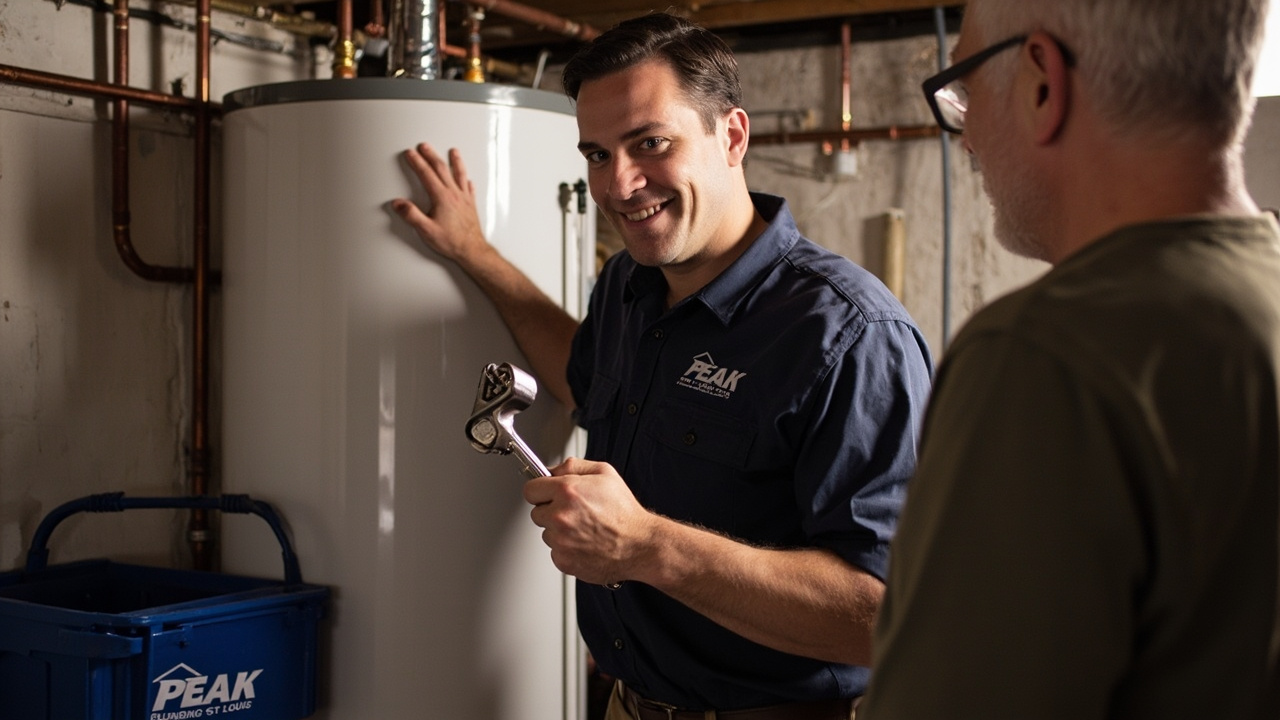
Peak Plumbing St. Louis has serviced water heaters across every neighborhood in the metro for years. We understand how water chemistry varies between Bellefontaine Neighbors and Mehlville. We know which subdivisions experience the worst sediment buildup. That local knowledge informs our water heater care checklist recommendations. A maintenance schedule that works in softer water cities fails in St. Louis. Trust a company that knows your water supply as well as your plumbing system.