
Planning Your Basement Bathroom Rough-In for an Arnold Home Remodel
Planning a basement bathroom rough-in in Arnold requires understanding St. Louis Metropolitan Sewer District regulations, local soil conditions, and proper drainage systems. Arnold homes built since the 1980s typically sit on clay-rich soil that affects trenching depth and pipe stability. This guide walks you through every step of the rough-in process so your basement bathroom meets code and functions reliably for years. St. Louis County Plumbing Code.
Understanding Basement Plumbing Rough-In Requirements in Arnold
Arnold homes often require sewage ejector pumps because most basement bathrooms sit below the main sewer line elevation. The St. Louis County plumbing code mandates specific minimum elevations for drain lines and requires backwater valves in areas prone to sewer backup. Arnold’s location near the Meramec River means many properties need additional flood prevention measures during basement finishing projects. How to Stop Your Ballwin Basement From Flooding During Heavy Spring Rains.
The rough-in phase includes installing all underground drain pipes, water supply lines, and vent stacks before concrete is poured. This work must pass inspection before you can finish walls or install fixtures. Missing this critical step leads to costly repairs later. Replacing Old Iron Pipes in Historic Webster Groves Homes.

Diagram showing proper basement bathroom rough-in dimensions with ejector pump location, vent stack routing, and drain line slopes meeting St. Louis County code requirements.
Step-by-Step Basement Rough-In Process
1. Site Assessment and Permit Application
Before breaking ground, we evaluate your basement’s existing plumbing configuration and soil conditions. Arnold’s clay soil requires wider trenching to prevent collapse during excavation. We then submit permit applications to both St. Louis County and the Metropolitan Sewer District, which typically takes 7-10 business days for approval.
2. Excavation and Slab Preparation
Using concrete saws with diamond blades, we cut precise trenches through your basement slab. Arnold’s older homes often have thicker concrete slabs that require specialized cutting equipment. We excavate to the required depth, typically 18-24 inches below the slab for proper pipe grading.
3. Underground Piping Installation
We install Schedule 40 PVC drain lines with a minimum slope of 1/4 inch per foot toward the ejector pit. Water supply lines use PEX tubing for flexibility in cold conditions. All connections receive primer and solvent cement for watertight seals. We pressure-test supply lines at 80 PSI before covering. How to Get a Same-Day Water Heater Repair in Sunset Hills.
4. Ejector Pump System Installation
The ejector pit receives wastewater from all basement fixtures. We install a 30-gallon capacity pit with a sealed lid to prevent sewer gas infiltration. The pump activates automatically when water reaches a specific level, pushing waste up to the main sewer line. Backup alarms alert you to pump failures.. Read more about How to Get Instant Hot Water at Every Tap in Your Warson Woods Home.
5. Vent Stack and Drain Connections
Proper venting prevents trap siphoning and allows sewer gases to escape safely through the roof. We run 2-inch vent pipes from each fixture to the main vent stack, typically extending through an existing wall cavity to the roof. All vents tie into the home’s existing plumbing system.
6. Inspection and Backfilling
Before covering pipes, we schedule the rough-in inspection with St. Louis County. The inspector checks pipe slopes, connections, and venting compliance. Once approved, we backfill trenches with gravel for drainage and pour new concrete to restore the floor surface.
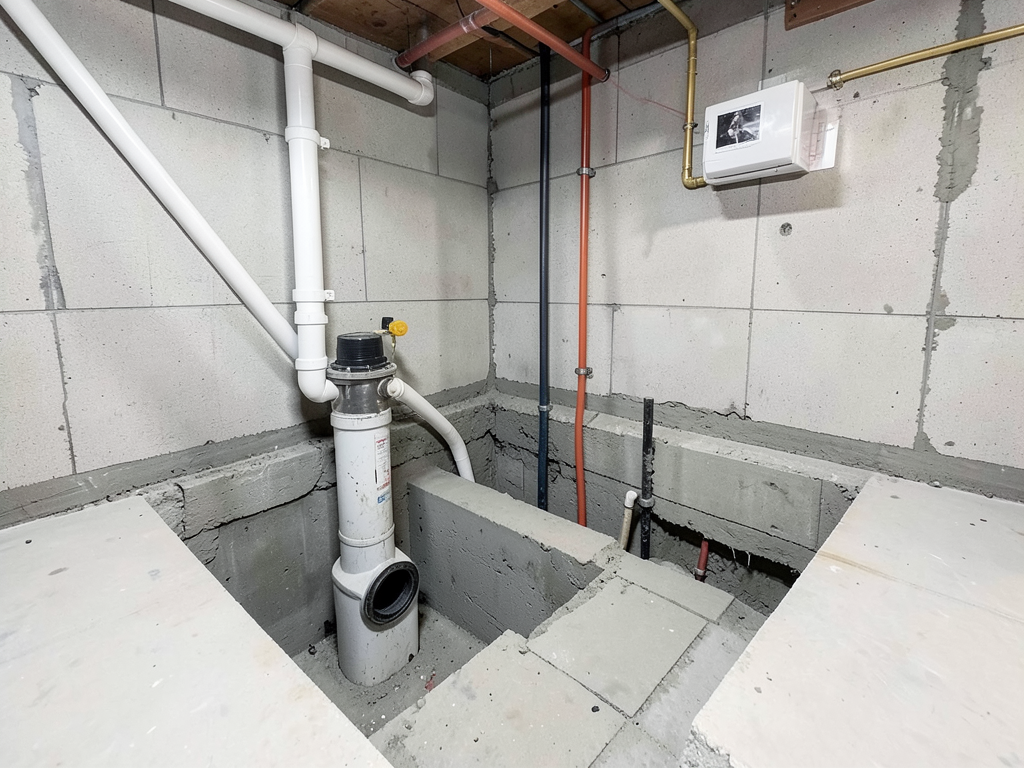
Photo showing a completed basement bathroom rough-in with exposed PVC pipes, ejector pump pit, and properly sloped drain lines ready for concrete coverage.
Navigating St. Louis Plumbing Codes and MSD Requirements
St. Louis County requires all basement bathroom rough-ins to comply with IPC Chapter 7 for drainage and venting. The code mandates specific pipe sizes: 3-inch drains for toilets, 2-inch for sinks and showers. Arnold falls under St. Louis County jurisdiction, so local inspectors apply these standards strictly.
MSD permits become necessary when modifying existing sewer connections or installing new ejector systems. The permit process includes reviewing your property’s sewer lateral location and ensuring proper backflow prevention. MSD charges permit fees based on project scope, typically ranging from $150 to $400 for residential basement bathrooms. MSD Permit Information.
Arnold’s proximity to flood-prone areas means many properties require additional flood prevention measures. We install check valves on main sewer lines to prevent backup during heavy rains. These valves automatically close when water flows backward, protecting your basement from sewage overflow.
Key Components: Ejector Pumps, Floor Drains, and Venting
Sewage ejector pumps handle the critical task of moving waste uphill to the main sewer line. We install 1/2 HP pumps capable of lifting waste 10-15 feet vertically. The pump sits in a sealed pit that collects water from all basement fixtures. When activated, it pumps waste through a 2-inch discharge line.
Floor drains provide emergency water removal if fixtures overflow or pipes leak. We install drains with P-traps that maintain water seals against sewer gases. The drain connects to the ejector pit, ensuring all basement water gets properly treated.
Proper venting prevents slow drainage and sewer gas problems. Each fixture needs its own vent that ties into the main vent stack. Without adequate venting, water drains slowly and creates gurgling sounds in traps. We ensure all vents meet the minimum 1.5-inch diameter requirement for bathroom fixtures.
Cost Factors for Basement Plumbing in the Arnold Area
Basement bathroom rough-in costs in Arnold vary based on several factors. Simple 3-piece bathrooms with basic fixtures typically range from $3,500 to $5,500. Complex installations requiring extensive excavation or pump upgrades can reach $7,000 to $9,000. Professional Gas Line Installation for Your New Outdoor Kitchen in Wildwood.
Key cost factors include:
- Excavation difficulty based on concrete thickness and soil conditions
- Distance from existing plumbing lines requiring additional piping
- Pump system capacity needs for multiple fixtures
- Permit fees from St. Louis County and MSD
- Inspection requirements and potential re-work
Arnold homes built before 1990 often need pipe replacement along with new installations due to aging galvanized supply lines. This adds $1,000 to $2,000 to the project cost but prevents future leaks and water damage.
Frequently Asked Questions About Basement Rough-Ins
How long does a basement bathroom rough-in take?
Most basement bathroom rough-ins in Arnold require 2-3 days for excavation, piping installation, and inspection preparation. Concrete curing adds another 24-48 hours before finishing work can begin.
Do I need a permit for basement bathroom plumbing?
Yes, St. Louis County requires permits for all new plumbing installations. MSD permits become necessary when modifying sewer connections or installing ejector pumps. Working without permits results in fines and failed inspections.
Can I rough-in plumbing myself to save money?
DIY rough-in work often fails inspection due to improper slopes, venting errors, or code violations. Professional installation ensures compliance and prevents expensive rework. Many homeowners discover DIY mistakes cost more to fix than professional installation. Why Kirkwood Homeowners Keep Calling Us for Stubborn Drain Clogs.
What happens if my ejector pump fails?
Ejector pump failures cause basement flooding and sewage backup. We install alarm systems that alert you to pump problems before major damage occurs. Regular maintenance every 12-18 months prevents most failures.
How do I know if my basement needs an ejector pump?
If your basement floor sits below the main sewer line elevation, you need an ejector pump. We measure the elevation difference during site assessment. Homes built on sloped lots or near rivers almost always require pump systems.
Photo of a licensed plumber using a digital level to measure pipe slopes during a basement rough-in inspection, ensuring compliance with St. Louis County plumbing codes.
Why Professional Installation Matters in Arnold
Arnold’s unique soil conditions and proximity to flood zones make professional installation essential. Our team understands local building codes, MSD requirements, and proper installation techniques for clay soil conditions. We’ve completed hundreds of basement bathroom rough-ins throughout Jefferson County and St. Louis County.
Professional installation includes warranty coverage, permit handling, and code compliance guarantees. We stand behind our work with a one-year warranty on all rough-in installations. Our experience prevents common problems like improper venting, inadequate slopes, and pump sizing errors.
Ready to start your basement bathroom project? Call (314) 417-7677 today to schedule your site assessment. We’ll evaluate your basement, explain your options, and provide a detailed quote with no hidden fees. Don’t let plumbing problems delay your remodel – contact us now and get your basement bathroom project moving forward.
You may also find this helpful. Modernizing Your Shrewsbury Laundry Room With Better Drainage and Safety Valves.
{
“@context”: “https://schema.org”,
“@type”: “BlogPosting”,
“headline”: “Planning Your Basement Bathroom Rough-In for an Arnold Home Remodel”,
“description”: “Complete guide to basement bathroom rough-in plumbing in Arnold MO including MSD permits, ejector pumps, and St. Louis building codes.”,
“wordCount”: 1387,
“datePublished”: “2026-03-17T15:38:00.000Z”,
“dateModified”: “2026-03-17T15:38:00.000Z”,
“inLanguage”: “en-US”,
“mainEntityOfPage”: {
“@type”: “WebPage”,
“@id”: “https://peakplumbingstlouis.com”
},
“publisher”: {
“@type”: “LocalBusiness”,
“name”: “Peak Plumbing St. Louis”,
“url”: “https://peakplumbingstlouis.com”
},
“author”: {
“@type”: “Organization”,
“name”: “Peak Plumbing St. Louis”,
“url”: “https://peakplumbingstlouis.com”
},
“image”: {
“@type”: “ImageObject”,
“url”: “https://peakplumbingstlouis.com/wp-content/uploads/2026/03/planning-your-basement-bathroom-rough-in-for-an-ar-1.png”
}
}
{
“@context”: “https://schema.org”,
“@type”: “Plumber”,
“name”: “Peak Plumbing St. Louis”,
“url”: “https://peakplumbingstlouis.com”,
“address”: {
“@type”: “PostalAddress”,
“addressLocality”: “St. Louis”
},
“areaServed”: {
“@type”: “City”,
“name”: “St. Louis”
}
}
{
“@context”: “https://schema.org”,
“@type”: “FAQPage”,
“mainEntity”: [
{
“@type”: “Question”,
“name”: “How long does a basement bathroom rough-in take?”,
“acceptedAnswer”: {
“@type”: “Answer”,
“text”: “Most basement bathroom rough-ins in Arnold require 2-3 days for excavation, piping installation, and inspection preparation. Concrete curing adds another 24-48 hours before finishing work can begin.”
}
},
{
“@type”: “Question”,
“name”: “Do I need a permit for basement bathroom plumbing?”,
“acceptedAnswer”: {
“@type”: “Answer”,
“text”: “Yes, St. Louis County requires permits for all new plumbing installations. MSD permits become necessary when modifying sewer connections or installing ejector pumps. Working without permits results in fines and failed inspections.”
}
},
{
“@type”: “Question”,
“name”: “Can I rough-in plumbing myself to save money?”,
“acceptedAnswer”: {
“@type”: “Answer”,
“text”: “DIY rough-in work often fails inspection due to improper slopes, venting errors, or code violations. Professional installation ensures compliance and prevents expensive rework. Many homeowners discover DIY mistakes cost more to fix than professional installation. Why Kirkwood Homeowners Keep Calling Us for Stubborn Drain Clogs.”
}
},
{
“@type”: “Question”,
“name”: “What happens if my ejector pump fails?”,
“acceptedAnswer”: {
“@type”: “Answer”,
“text”: “Ejector pump failures cause basement flooding and sewage backup. We install alarm systems that alert you to pump problems before major damage occurs. Regular maintenance every 12-18 months prevents most failures.”
}
},
{
“@type”: “Question”,
“name”: “How do I know if my basement needs an ejector pump?”,
“acceptedAnswer”: {
“@type”: “Answer”,
“text”: “If your basement floor sits below the main sewer line elevation, you need an ejector pump. We measure the elevation difference during site assessment. Homes built on sloped lots or near rivers almost always require pump systems.”
}
}
]
}
{
“@context”: “https://schema.org”,
“@type”: “BreadcrumbList”,
“itemListElement”: [
{
“@type”: “ListItem”,
“position”: 1,
“name”: “Home”,
“item”: “https://peakplumbingstlouis.com”
},
{
“@type”: “ListItem”,
“position”: 2,
“name”: “Blog”,
“item”: “https://peakplumbingstlouis.com/blog”
},
{
“@type”: “ListItem”,
“position”: 3,
“name”: “Planning Your Basement Bathroom Rough-In for an Arnold Home Remodel”
}
]
}
{
“@context”: “https://schema.org”,
“@type”: “Service”,
“serviceType”: “Plumbing”,
“provider”: {
“@type”: “LocalBusiness”,
“name”: “Peak Plumbing St. Louis”,
“url”: “https://peakplumbingstlouis.com”
},
“areaServed”: {
“@type”: “City”,
“name”: “St. Louis”
},
“description”: “Complete guide to basement bathroom rough-in plumbing in Arnold MO including MSD permits, ejector pumps, and St. Louis building codes.”
}